

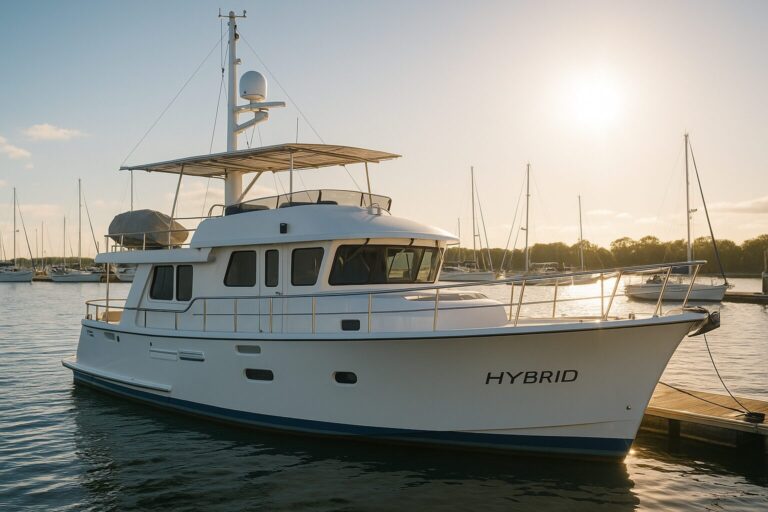
For decades, trawlers and pilothouse yachts have been trusted companions of those who love long-range cruising and life on the water For related guidance, see Can You Live on a Trawler?. Their classic lines, reliable diesel engines, and seaworthy hulls have made them icons of comfort and endurance. But just as the marine world has evolved with technology, so too has the conversation around how these vessels are powered. A growing number of builders and boaters are now asking an important question: What is the future of trawlers, and could it be hybrid or electric?
A Changing Tide in Boating
Around the world, attitudes toward sustainability and energy efficiency are shifting. The automotive industry is rapidly moving toward electric power, cities are investing in cleaner infrastructure, and people are increasingly conscious of their carbon footprint. Boating has not been left behind. From small electric runabouts to large hybrid-powered catamarans, the idea of cleaner cruising is catching on quickly.
For trawlers, which are known for their long voyages and steady cruising speeds, this shift carries both opportunities and challenges. Owners love these vessels for their ability to cover great distances at modest speeds while offering home-like comfort at sea. Traditionally, this has meant dependable diesel engines running for hours or even days at a time. But with advances in battery technology, hybrid propulsion, and smart energy systems, the next generation of trawlers might look and sound very different from those we know today.
What Makes a Hybrid or Electric Trawler Different?
In simple terms, an electric trawler relies on battery-powered motors rather than traditional diesel engines. A hybrid trawler combines both systems, using an electric motor for shorter trips or quiet cruising and switching to diesel for longer passages or when more power is needed. This dual setup allows for efficiency, flexibility, and reduced emissions without sacrificing range or reliability.
Modern hybrid systems often include energy recovery features such as regenerative charging while under diesel power, solar panels to top up batteries, and advanced power management systems that make it easy to switch between modes. In essence, a hybrid trawler gives boaters the freedom to choose when they want silent, emission-free cruising and when they need the muscle of traditional propulsion.
The Benefits of Going Hybrid or Electric
The most obvious advantage of an electric or hybrid trawler is its environmental friendliness. Electric propulsion produces no direct emissions, which means cleaner air and water. For boaters who spend time in pristine marine environments or remote anchorages, this makes a big difference. There is also a noticeable reduction in noise and vibration, which makes for a more peaceful experience onboard. You can hear the waves, the wind, and the birds instead of the steady hum of a diesel engine.
Another benefit is lower operational costs. Electricity, whether sourced from shore power or solar panels, is generally cheaper than diesel. Maintenance costs also tend to drop because electric motors have fewer moving parts and require less servicing. Over time, these savings can balance out the higher upfront cost of hybrid or electric systems. Beyond cost and comfort, there is also a growing sense of responsibility among boat owners. Many cruisers are passionate about ocean health and sustainability. Owning a cleaner, more efficient vessel allows them to enjoy their passion while aligning with their values.
The Challenges That Still Remain
Of course, hybrid and electric trawlers are not without their hurdles. Range and charging infrastructure are two of the biggest concerns. While battery technology is improving rapidly, fully electric trawlers still have limited range compared to their diesel counterparts. Hybrid systems help solve this issue, but they still depend on traditional fuel for long-distance travel.
Charging access is another challenge. In major marinas and coastal cities, shore power suitable for recharging large battery banks is becoming more common, but in remote areas or small ports, it is still rare. This means boaters who love exploring far-off destinations will need to plan carefully or rely on diesel backup power. There is also the question of cost. While prices are gradually coming down, hybrid and electric systems can still be significantly more expensive than traditional setups. However, as more builders adopt these technologies and production scales up, costs are expected to continue dropping, much like what has happened in the automotive industry.
What Builders and Innovators Are Doing
Several yacht and trawler manufacturers are already investing heavily in hybrid and electric designs. European builders, in particular, have been early adopters, creating models that combine solar power, battery storage, and efficient hull designs. In North America, interest is rising as well, especially among custom builders who see the value in giving owners more options.
Advances in lithium-ion batteries, lightweight materials, and smart power systems are making it easier than ever to design efficient and capable vessels. Some companies are experimenting with modular hybrid systems that can be upgraded over time, allowing owners to start with a traditional diesel setup and later add electric capability when the technology or infrastructure makes it more practical.
Custom yacht builders, such as those working in the North Pacific region, are also exploring ways to integrate hybrid propulsion into traditional trawler designs without losing the character, reliability, or comfort that owners expect. The goal is to blend classic craftsmanship with modern innovation, creating vessels that are as timeless in design as they are forward-thinking in technology.
What the Future Might Look Like
It is clear that hybrid and electric propulsion will play an increasingly important role in the future of trawlers and pilothouse yachts. While diesel power will remain dominant for long-range voyaging in the near term, the next decade is likely to bring significant change. We may soon see trawlers capable of cruising silently for hours, recharging their batteries through solar panels, or even recovering energy from propeller rotation while under sail or current drift.
As charging infrastructure expands and battery technology continues to improve, full-electric trawlers could become a realistic choice for more owners, particularly those who cruise near coastal regions or prefer shorter passages. In the same way that hybrid cars once seemed futuristic and are now common, hybrid trawlers may soon become the new standard for environmentally minded boaters. The change will not happen overnight, but the direction is clear. Innovation, regulation, and customer demand are all steering the industry toward cleaner, more efficient solutions. For many, this evolution is not just about technology but about preserving the beauty of the oceans and coastlines that make boating such a joy in the first place.
Final Thoughts
The future of trawlers is bright, and it is electric or at least partly so. Hybrid and electric propulsion systems offer a compelling vision of quieter, cleaner, and more efficient cruising without sacrificing the comfort or capability that trawler owners cherish. While challenges remain, the progress made in just a few years has been remarkable, and the pace of innovation shows no sign of slowing down.
For boaters and builders alike, this is an exciting time. Choosing to invest in hybrid or electric technology is not only about keeping up with trends but also about leading the way toward a more sustainable future on the water. Whether you dream of crossing vast distances or quietly exploring hidden coves, the next generation of trawlers promises to make the journey smoother, smarter, and more in harmony with the world we love to explore.
Contact Us
We turn your cruising dreams into reality by developing bespoke trawler and pilothouse yachts built for comfort, safety, and performance. From the initial hull design to the final varnish, our experienced naval architects and craftsmen collaborate with you every step of the way, integrating fuel-efficient engines, ergonomic deck layouts, and beautifully appointed living spaces. With industry-leading warranties and personalized support, we make sure your new yacht feels like home the moment you step on deck. Reach out to us by email at info@northpacificyachts.com for personalized responses to all your inquiries. If you’d prefer a conversation, we invite you to give us a call at 1-844-922-4877.