

A sheltered helm can make operating conditions more comfortable, but it cannot supply an extra pair of hands. Solo owners and cruising couples still need to cover navigation, watchkeeping, deck work, equipment monitoring and the ordinary tasks of life aboard.
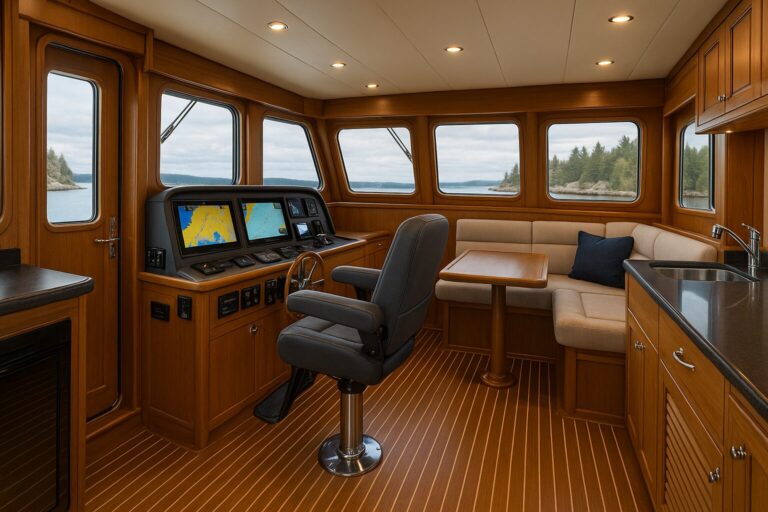
The purchase question is whether the crew can manage those demands on the proposed trips. Is a Pilothouse Yacht Right for Single-Handed Cruising? considers physical layout and operating fit. This guide focuses on readiness: who does each job, what happens when jobs overlap and what skills or support are missing.
Map the Work Your Crew Must Cover
Cruising tasks do not always occur in a convenient order. An arrival can coincide with traffic, a radio call and preparation of deck equipment. A person who usually helps may be resting or feeling unwell.
Separate tasks that can wait from those that need continuous attention or a timely response. Preparing food or tidying can usually be scheduled around the operation. Watchkeeping and responding to a developing hazard cannot simply be placed at the end of a domestic task list.
Preparation helps reduce conflicts without removing them. Discuss the arrival plan before it becomes urgent, organize needed equipment and identify which information you still need. The appropriate sequence depends on the boat and circumstances, so a general article should not prescribe leaving the controls to handle lines.
Plan for Fatigue and Attention
USCG guidance states that a proper lookout must be maintained at all times, including by recreational and one-person crews. It involves sight and hearing and appropriate available means. An autopilot or an alarm does not remove that responsibility.
Ask how your proposed passage allows rest while maintaining the necessary attention. If the answer depends on one person staying alert beyond their capacity, shorten or change the plan rather than assume that an enclosed helm will solve fatigue.
For a couple, discuss whether both people can undertake the necessary roles and what happens if one becomes unavailable. For a solo owner, the same question may expose a trip that requires additional crew, different timing or more support. This is useful information to establish before buying.
Shelter, seating and climate equipment may help comfort. They do not guarantee endurance or eliminate sound and visibility concerns. Consider how the actual helm supports an attentive watch.
Check Deck Tasks and Failure Response
Equipment convenience and equipment knowledge are different. A reachable control is useful only if the operator understands what it does and can recognize a problem. Review manuals, labels, access and the training needed for the installed systems.
Use a workload sheet to identify gaps:
| Task | Usual person or plan | If that person or system is unavailable | Training or support needed |
|---|---|---|---|
| Helm and lookout | |||
| Navigation and communication | |||
| Arrival and deck preparation | |||
| Anchoring and ground tackle | |||
| Equipment monitoring | |||
| Calling for assistance |
The blank cells are the point. A plan that says “my partner handles it” is incomplete until both people know what happens if the partner cannot help. Likewise, naming a backup device does not establish that someone can use it or that the same fault will not affect it.
Ask how assistance would be requested and what communication coverage is available on the intended route. Do not build the plan around an assumed response time or treat a towing membership as a guarantee of immediate help.
Choose Training and Support Alongside the Boat
Begin with a discussion of your intended use and present experience. Arrange instruction on the actual yacht and its systems with an appropriately qualified instructor. The instructor should select safe exercises and conditions; simulated emergencies should not create a real loss of control or abandon the lookout.
A useful progression can include familiarization while secure, supervised operation in suitable conditions and a review of what remains beyond the crew’s current capacity. There is no fixed number of training days or universal solo trial that demonstrates readiness for every passage.
Keep a short list of unresolved needs: equipment knowledge, a role neither person can cover, a communication gap or a passage longer than the crew can sustainably manage. Resolve those before treating the ownership plan as workable.
Our 49 Pilothouse is one model to consider as you compare your crew’s needs with the equipment and layout. Construction and layout features are not proof that a particular small crew is ready to operate it in difficult conditions.
When you Plan Your Yacht with us, bring your workload sheet and training questions along with your preferred destinations. The aim is to choose a boat and support plan that match what your crew can actually manage.