

Fuel use can change sharply with speed, engine choice, load, weather, and sea state. That makes a model name alone a weak basis for comparing the most fuel-efficient trawler or yacht for a particular cruising plan.
This comparison keeps the five-model format and uses current manufacturer pages for two North Pacific and three Grand Banks models. Both manufacturers publish fuel-use and range data, but they present the results differently. North Pacific uses plotted curves without labeled point values, while Grand Banks lists exact figures. These source differences prevent a direct ranking and do not establish the five most fuel-efficient yachts across the market.
Readers who want the design and operating context behind these figures can review how hull shape, propulsion, load, and speed affect trawler fuel efficiency.
| Model | Published Standard Engine Configuration | Fuel Capacity | Published Fuel-Use Point | Published Range at That Point |
|---|---|---|---|---|
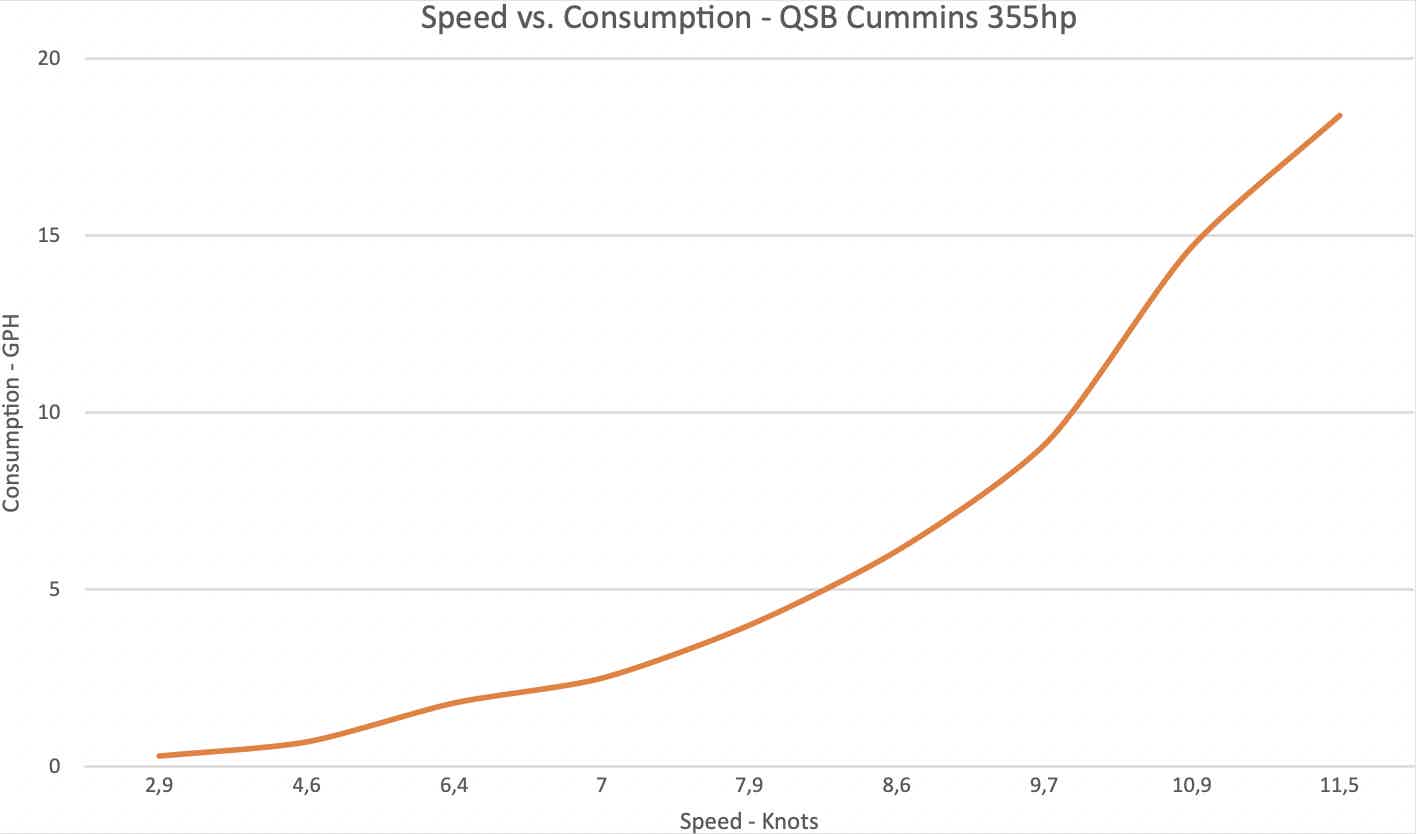
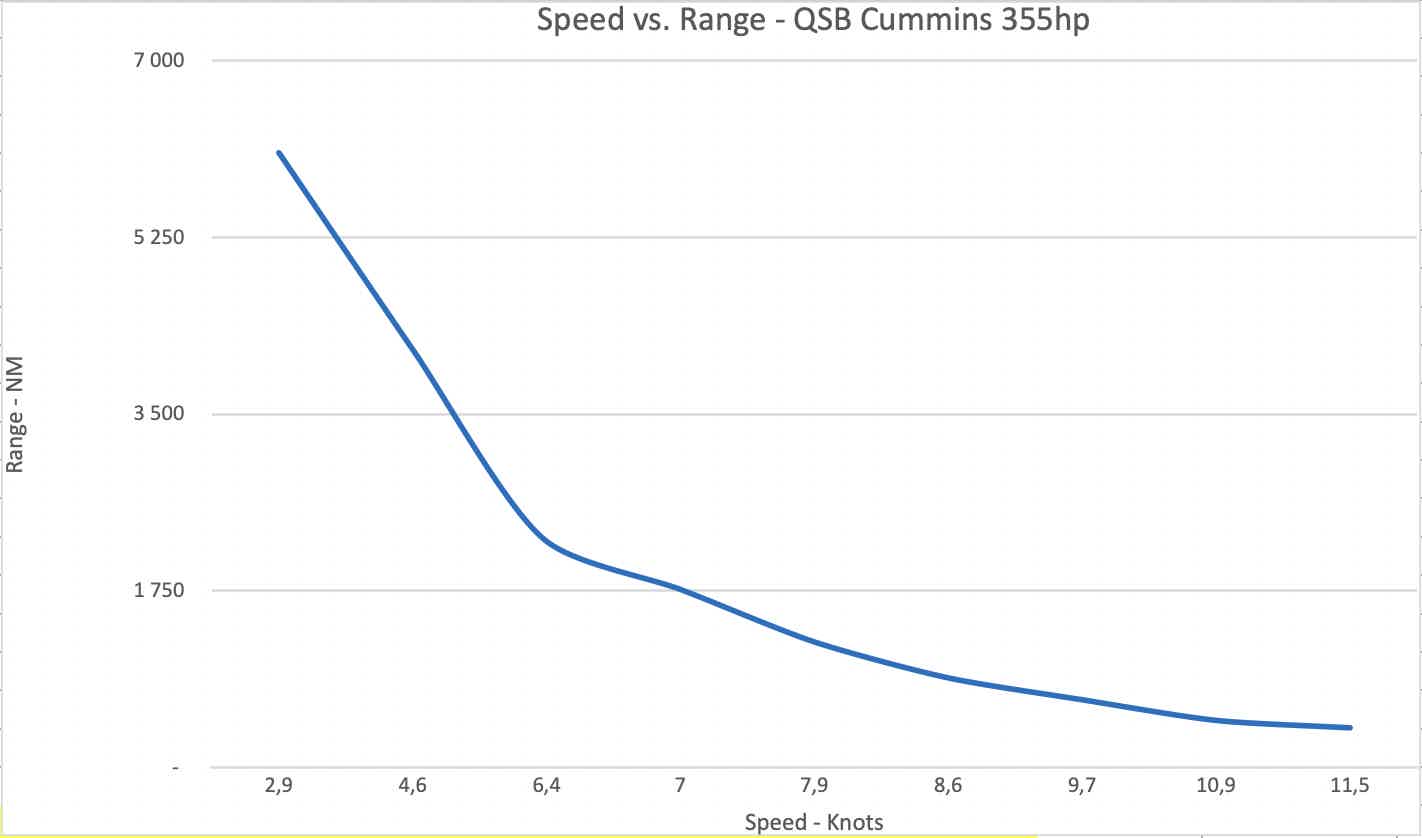
| North Pacific 45 Pilothouse | Single Cummins QSB6.7, 355 hp | 400 gal standard; chart uses 700 gal | Official consumption chart; curve has no labeled point values | Official range chart; curve has no labeled point values |
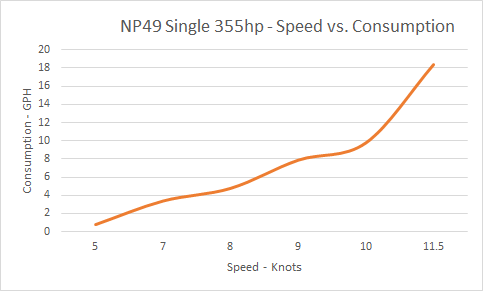
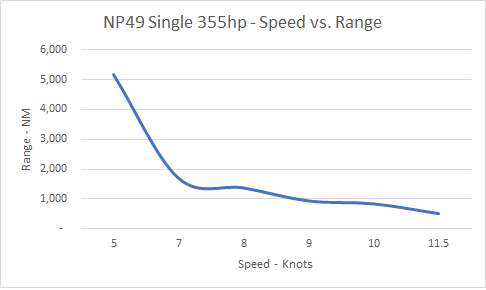
| North Pacific 49 Pilothouse | Single Cummins QSB6.7, 355 hp | 700 gal standard; chart uses 920 gal | Official consumption chart; curve has no labeled point values | Official range chart; curve has no labeled point values |
| Grand Banks 54 | 2 x Volvo D11 shafts at 725 hp | 925 gal | 40 gph at 21 kn | 490 nm |
| Grand Banks 62 | 2 x Volvo D13 shafts at 900 hp | 1,532 gal | 38 gph at 20 kn | 817 nm |
| Grand Banks 65 | 2 x Volvo IPS 1350S at 1,000 hp | 1,532 gal | 33 gph at 20.8 kn in the specification table | 957 nm in the specification table |
North Pacific states the load and sea conditions for its charts and includes a 10% reserve in range. Grand Banks states that its figures apply to standard vessels tested at half-load. Different configurations and conditions may change the results for any yacht.
1. North Pacific 45 Pilothouse
The current North Pacific 45 Pilothouse model page lists a single 355-hp Cummins QSB6.7 engine. Its official specifications and performance charts list 400 gallons as standard fuel capacity and 700 gallons as an option. Those charts use the 700-gallon capacity.
North Pacific describes the charted boat as loaded for cruising, with fuel and water almost full in calm sea conditions. Its range curve includes a 10% reserve. The chart plots speed against consumption and range, but it does not label individual values along the curve. This article links the original charts instead of estimating numbers from the plotted lines.
2. North Pacific 49 Pilothouse
The current North Pacific 49 Pilothouse model page also lists a single 355-hp Cummins QSB6.7 engine. Its official specifications and performance charts list a 700-gallon standard fuel capacity and a 920-gallon option. Those single-engine charts use 920 gallons.
The chart conditions match the North Pacific 45 record: fuel and water almost full, the vessel loaded for cruising, calm seas, and range calculated with a 10% reserve. North Pacific publishes separate charts for other 49 Pilothouse engine configurations. Because the single-engine curves have no labeled point values, the comparison does not convert them into estimates.
3. Grand Banks 54
The Grand Banks 54 specifications pair two 725-hp Volvo D11 shaft engines with a 925-gallon fuel capacity. At 21 knots, the published performance point is 40 gallons per hour with a 490-nautical-mile range.
This is the smallest standard fuel tank among the three Grand Banks models in this comparison. Its numbers still need the same half-load qualification as the larger models. Optional shaft and IPS configurations have different fuel-use and range figures, so engine choice matters.
4. Grand Banks 62
The Grand Banks 62 specifications retain a useful observation from the original article: 38 gallons per hour at 20 knots. With two 900-hp Volvo D13 shaft engines, the standard setup carries 1,532 gallons and lists 817 nautical miles of range at that performance point.
Grand Banks also states a 2,000-nautical-mile range at 10 knots in the model overview. That slower-speed figure is informative, but it is a separate operating point. It should not be combined with the 20-knot fuel-use figure.
5. Grand Banks 65
The Grand Banks 65 specification table lists two 1,000-hp Volvo IPS 1350S engines and 1,532 gallons of fuel. In that table, the published result is 33 gallons per hour and 957 nautical miles at 20.8 knots.
The same official page currently shows 41 gallons per hour and 625 nautical miles at 20.8 knots in its highlight panel. It does not identify a separate configuration for those highlight values. This source discrepancy prevents a single unqualified GB65 fuel-use figure, so buyers should confirm the applicable performance data with the manufacturer.
Why Test Conditions Matter
Fuel-use tables and charts describe a test, not every future trip. North Pacific identifies cruising load, tank state, calm seas, and a 10% range reserve for its curves. Grand Banks identifies half-load and standard configuration as the shared basis for its figures. Added stores, tender weight, hull condition, wind, waves, current, and engine selection can change the result on the water.
Fuel capacity also does not prove usable range by itself. Reserve policy and operating speed belong in the calculation. Our explanation of fuel capacity and cruising range provides more context for that distinction.
Source format matters too. North Pacific performance curves show the relationship among speed, fuel use, and range without publishing exact labels for each point. The GB65 page presents a different limitation: its highlight panel and specification table publish conflicting results at the same speed. A transparent comparison preserves both limitations instead of inventing precision or selecting the more favorable number.
Comparing Fuel Use with Your Cruising Plans
Start with the speed you expect to use, then match the fuel-use figure to its engine configuration and test condition. Compare published range only at the stated operating point. A slower-speed range figure answers a different question from fuel burn at a faster cruise.
These five examples show how current manufacturer data can support fuel-consumption research. They do not name a winner. Your useful comparison will also depend on cruising speed, reserve policy, typical load, route, and the configuration of the specific yacht.
This article compares manufacturer-published data. To discuss speed, range, and onboard priorities for your own use case, contact North Pacific Yachts.
Sources
- North Pacific 45 Pilothouse
- North Pacific 45 Pilothouse specifications and performance charts
- North Pacific 49 Pilothouse
- North Pacific 49 Pilothouse specifications and performance charts
- Grand Banks 54
- Grand Banks 62
- Grand Banks 65
Specifications & Performance
Review published specifications and test figures
Examine tankage, dimensions, and recorded trial data for the North Pacific 45 Pilothouse. You can also view the published specifications for the North Pacific 49 Pilothouse to compare technical details.