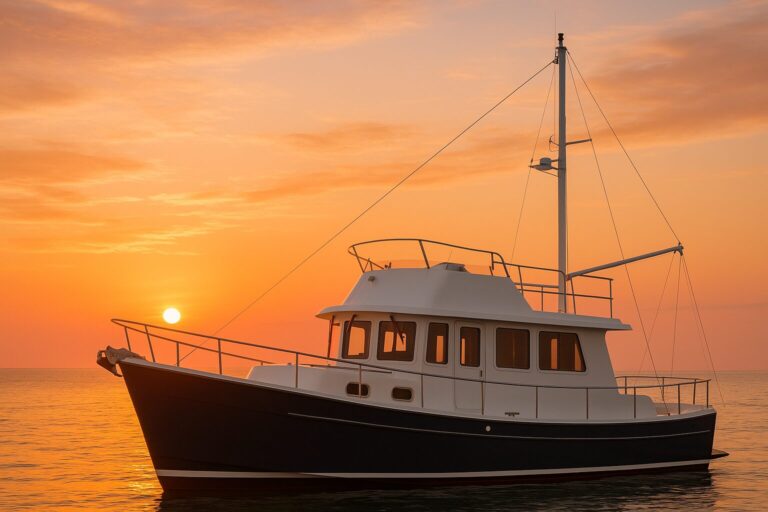
Underwriters do not assess trawlers in the abstract. They evaluate the vessel’s systems, your documented time at the helm, where you take the boat, and whether you live aboard.
For a trawler owner planning extended cruising, a useful insurance conversation connects the particular boat to its intended route, time aboard, and seasonal arrangements. The trawler label does not establish coverage by itself; the issued policy and its conditions determine the protection available.
Building the Risk Profile: Vessel, Experience, and Operations
Four useful subjects to prepare for a quote request are the vessel platform, the operator’s background, the operating grounds, and the time spent living aboard.
Vessel Specifications and Age
Prepare the boat’s dimensions, age, propulsion and equipment details, together with condition and maintenance records. Ask which surveys, valuations, photographs, or follow-up documents the provider needs for this particular application; requirements vary.
Documented Operator Experience
Describe your operating experience honestly, including comparable boats, waters, training, and whether you intend to operate alone or with crew. Ask whether the provider has any operator or training conditions and how they would be recorded in the policy.
Cruising Grounds and Seasonal Plans
Where you keep and run the boat dictates your risk exposure. Sheltered inland cruising presents vastly different hazards than open-ocean passages, tidal currents in the Pacific Northwest, or hurricane tracks along the Atlantic seaboard. Be prepared to share your detailed cruising itinerary with your broker.
Extended Time Aboard and Liveaboard Status
Explain whether you expect occasional overnight stays, extended cruising, or full-time living aboard. Ask how the provider treats that use, whether personal belongings and liability need particular attention, and how to report later changes.
Core Coverage: Hull and Machinery vs. Marine Liability
A trawler policy divides into two distinct pillars of protection: physical damage to your boat and liability for damage you cause to others.
Hull and Machinery Protection
Physical damage coverage, often called hull and machinery, addresses accidental loss or damage to the boat and covered equipment. Ask exactly which installed systems, belongings, and auxiliary craft are included, and check their limits and exclusions.
Protection and Indemnity (P&I)
Liability protection addresses covered responsibility for injury to others or damage to their property. Ask about liability limits, defense costs, fuel-spill liability, wreck removal, and salvage; these subjects should be checked against the actual policy rather than assumed to be included. Confirm any insurance requirements imposed by your marina or other facilities.
Settlement Terms: Agreed Value vs. Actual Cash Value
How an insurer settles a total loss determines whether you can replace your trawler if catastrophic damage occurs. Carriers generally offer two distinct settlement structures, subject to specific provider forms and state availability.
Agreed Value
An agreed value policy establishes the insured boat value when the policy is written. For a covered total loss, depreciation is not used to reduce that agreed valuation, subject to the policy’s settlement provisions. Check whether a deductible applies and how partial losses are settled; the treatment of individual components can differ.
Actual Cash Value (ACV)
An actual cash value policy settles losses based on the fair market value of the vessel at the moment of destruction, factoring in age, wear, tear, and ongoing market depreciation.
Ask how the provider calculates actual cash value for a covered total loss and handles depreciation in partial repairs. Compare the settlement method with the premium and your ability to fund a shortfall; the better fit depends on the actual quotes and your priorities.
Policy Warranties: Cruising Boundaries and Lay-Up Periods
Marine insurance policies include strict conditions known as warranties. A departure from a policy condition can affect coverage. Ask your adviser to explain the particular wording and the approval process for changes before relying on it.
Navigation Warranties
A navigation warranty identifies the geographic operating limits under the policy. Match those limits with the entire intended itinerary, including transit passages, international waters, and storage or haul-out locations. If your plans extend beyond them, ask the provider about approval and any policy change before making the trip.
Lay-Up Warranties
A lay-up warranty requires the boat to be out of service during designated off-season months. The policy will specify whether the boat must be stored ashore (on the hard) or may remain afloat in a safe slip.
Ask which activities and occupancy are permitted during lay-up and whether the dates and storage conditions fit your plans. Obtain the provider’s agreement to any necessary change before using the boat outside the agreed conditions.
Deductibles and Exclusions: Separating Accidents from Upkeep
Insurance transfers the financial impact of sudden, fortuitous accidents. It is not designed to cover predictable aging or deferrals in basic upkeep.
Read the exclusions as carefully as the coverage summary. Gradual deterioration, wear, and maintenance-related losses need particular attention, but their treatment and any resulting damage vary by contract. Ask your adviser how the wording applies to a damaged part and to additional damage caused by its failure. Keep routine care in your maintenance budget rather than assuming insurance will fund it.
Compare the deductible for each relevant coverage and event. Ask whether a named-storm deductible differs from the ordinary physical-damage deductible, how it is calculated, and which conditions trigger it. Consider these amounts alongside the wider ownership budget so a lower premium does not obscure a larger retained loss.
The Trawler Insurance Quote-Comparison Checklist
When evaluating quotes from different marine underwriters, use this checklist to compare terms side-by-side:
- [ ] Valuation Foundation: Is the hull written as an Agreed Value or Actual Cash Value (ACV)?
- [ ] Partial Loss Settlement: Are partial losses settled on a “new for old” basis, or does depreciation apply to repaired gear and components?
- [ ] Cruising Territories: Do the geographic boundaries cover your intended home waters, transit passages, and haul-out facilities?
- [ ] Seasonal Lay-Up Details: Are lay-up dates and storage conditions (afloat vs. on the hard) compatible with your winter plans?
- [ ] P&I Liability Limit: Does the liability limit meet any confirmed requirements of your home marina or other facilities?
- [ ] Fuel Spill and Environmental Salvage: Is fuel spill liability coverage written as a separate statutory limit or deducted from your main P&I total?
- [ ] Wreck Removal Terms: What limits and conditions apply to wreck removal if the boat sinks or is stranded?
- [ ] Occupancy Approvals: Does the carrier officially acknowledge your status (recreational use, extended cruising, or liveaboard)?
- [ ] Auxiliary Craft Coverage: Are your tender, its outboard engine, and mounted davit systems included within the primary hull schedule?
- [ ] Deductible Schedule: What are the flat dollar deductions for standard hull claims versus percentage deductions for named windstorms or electronics?
- [ ] Operator Prerequisites: Are there captain-checkout stipulations, formal training requirements, or single-handed offshore restrictions?
Engaging Your Marine Broker
Work with an insurance adviser who can explain the policy options available for your boat and intended use. Ask them to identify material differences between quotes and confirm how your cruising plans are represented in the issued documents.
Assemble a complete ownership dossier before requesting quotes. Include:
1. Your structured marine resume detailing all recent sea time.
2. The survey and condition records requested by the provider, with the status of any recommendations clearly documented.
3. Your proposed cruising plan, seasonal locations, and liveaboard expectations.
Clear information gives your adviser a better basis for explaining the options. Before accepting a quote, verify the agreed operating area, occupancy, settlement terms, limits, deductibles, and exclusions in the documents you will rely on.
Sources