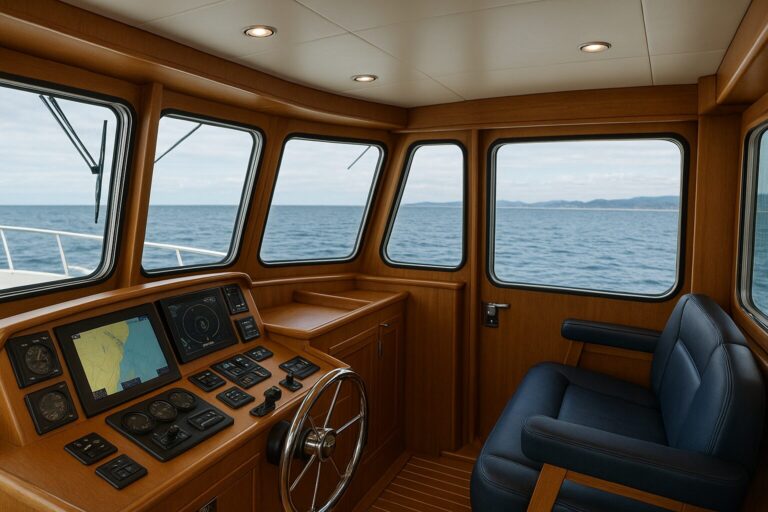
A pilothouse gives a crew a defined place to manage navigation, but clear communication depends on how people use the particular boat. Can the person at the helm hear a deck report? Does a companion seat give another observer a useful view? Can guests move through the space without interrupting the watch?
Those questions connect layout to everyday cruising. For an owner travelling with a partner or guests, the goal is a shared understanding of what is happening and who is responsible for each task. Shelter and seating can support that understanding; the crew still needs agreed routines.
Understand Where Communication Happens
Start with the relationship between the helm, passenger seating and working deck. Some arrangements keep a companion close enough for an ordinary conversation. Others separate the navigation space from the living area, which can reduce distractions while making communication with someone aft more difficult.
Neither arrangement answers every need. A nearby seat is helpful only if its occupant can observe without blocking the helmsperson’s view or access to controls. A door may shorten a walking route, but its position does not establish a clear sightline to every line-handling station.
Consider your usual crew. Two experienced partners may want space to review a chart together. Guests may need a comfortable place to sit that leaves the watch undisturbed. Looking at pilothouse layouts with those routines in mind makes the comparison more useful than judging the size of the helm alone.
Agree Roles Before Leaving
Discuss the departure and intended arrival while the boat is secure. Identify who will handle each task, who will report observations and who will remain available to help. Match assignments to experience and physical ability, and let someone say when a task is unfamiliar.
Useful briefing questions include:
- Who is watching traffic while another person prepares lines or fenders?
- What words will we use to identify the side of the boat and the location of a concern?
- How will a crew member report that they have not understood a request?
- What is our alternative communication method if speech or a headset becomes unclear?
Specific observations usually help more than vague warnings. “The aft corner is getting closer to the piling” gives the helm a location and a trend. Agree how you will describe distances without suggesting that an estimate is a precise measurement.
A briefing also gives guests a chance to learn where they should sit or stand and whom to tell if they notice a problem. It should be a conversation they understand, rather than a list of nautical terms they must remember.
Keep Information Clear Underway
An enclosed space changes how speech and outside sounds reach the watch. Machinery, ventilation, music and conversation can compete with reports and radio traffic. Assess what can actually be heard aboard your boat rather than assuming an enclosure is either silent or acoustically transparent.
USCG Navigation Rule 5 requires a proper lookout by sight and hearing, together with appropriate available means. A screen does not remove the need to observe and listen. Crew coordination should support that task and avoid leaving everyone focused on the same display.
Hand Over the Whole Situation
A watch handover should convey the current route, nearby traffic, observed weather, relevant equipment status and unresolved concerns. The incoming person needs time to ask questions and understand who has responsibility before the outgoing watch leaves.
A short written reminder can help keep the transfer consistent. It is especially useful when a change has occurred since departure, such as an equipment problem or a revised destination.
Connect the Deck and Helm
Voice, agreed visual signals and headsets each have limitations. Speech may be masked by noise, signals require a clear view, and headsets need reliable power and connection. Discuss how the crew will recognize a communication failure and what the agreed response should be with a competent instructor familiar with the boat.
Acknowledging a report helps the sender know it was received. A reply should reflect the meaning of the message, rather than simply repeat a phrase without understanding it.
Review the Arrangement Together
While securely moored, examine normal seating positions, walking routes, obstructed views and places where speech becomes difficult to understand. Include the people who usually cruise with you: differences in height, hearing and mobility can change how an arrangement works.
Record the questions that remain. A walkthrough with us can focus on how a particular layout fits your crew, while an instructor can help develop suitable operating routines. If a trip may extend into darkness, review day and night cruising separately so that lighting and watch planning receive the attention they deserve.
Sources