Yacht design does not march in a straight line from crude beginnings to enlightened modern solutions. Real naval architecture is a continuous dialogue where classic operational habits and fresh experiments run side by side.
When you step aboard a boat today, you are looking at layers of decisions refined over decades. Some ideas arrived, proved their utility, and stayed. Others pushed aesthetic or technical boundaries in custom builds before settling into sensible niches. Understanding where these concepts originated helps you separate lasting functional design from passing dockside novelties.
A Half-Century Timeline of Competing Ideas
To understand how modern cruising vessels take shape, look at a sequence of specific design choices over the last fifty years. These projects and product releases show designers testing new boundaries while keeping one foot planted in proven practices.
- 1975 — LAC II: Feadship’s fleet record documents an interior by independent designer Pierre Tanter. It is a specific example of specialist interior design becoming part of a custom yacht project.
- 1988 — Gallant Lady: The Feadship Heritage Fleet record describes vertical glass around the observation deck. This specific example shows exterior glazing becoming a notable part of a custom yacht’s design.
- 1990 — Virginian: Feadship’s fleet record describes classic exterior lines and an old-world maritime interior. This example shows that contemporary construction and traditional styling could coexist.
- 1991 — Garmin GPS 100: Garmin’s company history dates the launch of its multi-market GPS receiver to 1991, marking one documented step in consumer access to satellite navigation.
- 2007 — Garmin GPSMAP 5000: Garmin records the introduction of touchscreen marine chartplotters in this series. It provides a concrete example of the changing helm interface.
- 2015 — Savannah: Feadship’s fleet archive records this custom superyacht with hybrid propulsion. It illustrates a large project exploring a different power arrangement, without establishing that the same system became standard on smaller cruisers.
None of these milestones wiped away what came before. Instead, they expanded the toolbox.
Living Arrangements: Bridging Closed Quarters and Open Social Decks
Yachts of different periods contain many arrangements, so age alone cannot tell you whether a galley is separated, a helm is enclosed or a salon feels open. Historical examples show changing possibilities, but they do not establish one layout for every yacht of a decade.
For a buyer today, the practical comparison is between the spaces on the actual boat. Can someone preparing food remain part of a conversation? Where do guests gather underway? Does movement between the galley, cockpit and helm fit your routine? These questions connect yacht design history and the yacht design process to choices you can inspect.
Galley position is a useful example. A galley near the salon and an aft galley connected to the cockpit can each support shared time aboard in different ways. Evaluate the particular doors, steps, counters and seating rather than assuming that one position is inherently modern or better.
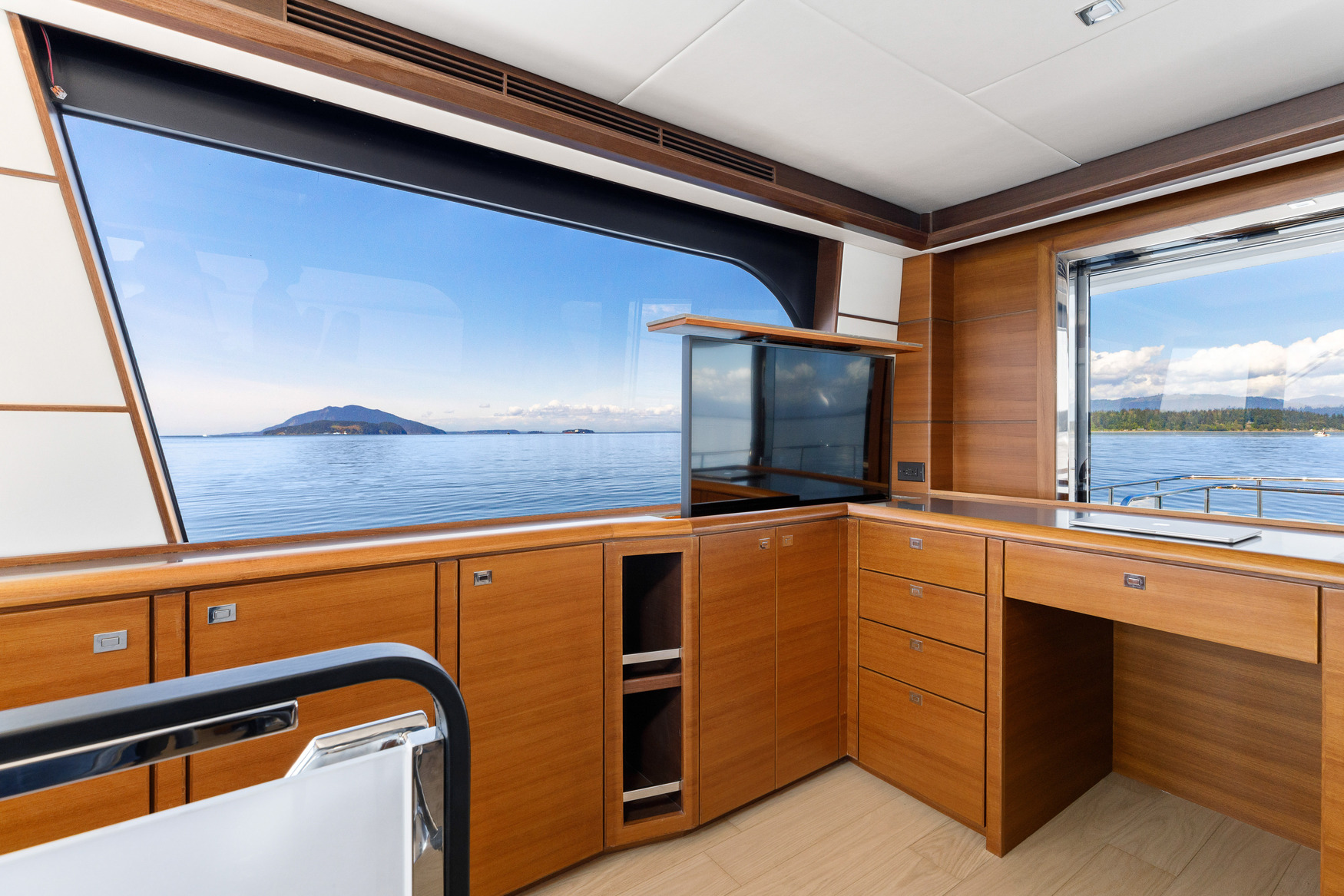
Our 49 Euro Pilothouse pairs an aft galley with easy cockpit access and an aft door that slides in either direction. Its interior combines ash, wenge and blackwood with oak flooring. This current example brings a different visual character and arrangement to a pilothouse yacht, while retaining wood as an important part of the interior.
Helms and Machinery: Screen Technology and Mechanical Reality
Navigation equipment offers another visible point of comparison. Garmin’s dated product releases show a change from an early consumer GPS receiver to touchscreen chartplotters. The wider history includes many manufacturers and equipment choices, so these examples should not be read as a complete timeline of every helm.
When comparing an older and newer helm, consider what information is displayed, how the controls are operated and what equipment remains supported. More functions on a screen do not automatically make a helm easier for a particular owner to use.
During a walkthrough, identify the controls for essential equipment and ask how they work if a display or another component is unavailable. Consider whether the arrangement is clear to you and to the people who will operate the boat.
Savannah’s hybrid propulsion is a useful historical example because it links a particular yacht to a particular engineering choice. Its size and custom power plant limit what a buyer can infer about another boat. Assess the propulsion and charging arrangement of the yacht you are considering on its own requirements and evidence.
For buyers, build quality and service access remain useful questions across yacht ages and propulsion types. Ask to see how filters, strainers, valves and other service points can be reached, and discuss the maintenance requirements of the installed equipment. A design feature is valuable when it works for the way the yacht will be used and maintained.
Practical Inspection Questions for the Prospective Buyer
When you step aboard a new or brokerage vessel, look past fresh cushions or glossy brochure specs. Inspect how design choices will impact your daily maintenance schedule and your time underway:
- How is the galley positioned relative to cockpit and deck movement? Does it isolate the cook during social gatherings, or does it offer direct, level access to the outdoor deck where guests gather and lines are handled?
- Where are the physical boundaries of the helm controls? Are critical functions—such as bow thruster controls, anchor windlass remotes, and VHF radios—accessible by muscle memory, or are they integrated into menus that require your eyes to leave the water?
- What is the true service clearance around the main engine and generator? Can you change a raw-water pump impeller without unbolting an exhaust riser, or reach every through-hull valve with two hands while standing flat on the floorboards?
- How do the selected interior woods and deck materials respond to water tracking? Ask about care instructions, water exposure and repairability for the actual finish; appearance alone does not establish durability.
- How is gear and tender management handled on deck? Sleek exterior lines can coexist with different storage and handling arrangements. Inspect the equipment and access on the particular boat. Ask to see the deployment process and consider whether its equipment and workload fit your crew.
Choosing the Boat for Your Cruising Plans
No single yachting era holds a monopoly on good ideas. A plumb bow, a low-maintenance interior finish, or a wide aft-galley door is only as good as the cruising life it supports.
When you evaluate a boat, look closely at how the builder chose to merge yesterday’s hard-won lessons with modern deck plans. If you are weighing different layouts, hull formats, and deck designs for your own cruising plans, talk with us about the operational priorities that matter on the water.
Sources
- Feadship LAC II fleet record
- Feadship Heritage Fleet: Gallant Lady / Sphinx
- Feadship Virginian fleet record
- Garmin company history
- Feadship Savannah fleet archive
- 49 Euro Pilothouse overview