People move aboard yachts to trade passive square footage for an intentional relationship with their surroundings, routines, and time.
Living aboard is not an extended vacation, nor is it an automatic shortcut to low-cost waterfront housing. It is a fundamental operational shift. The lifestyle appeals to those who prefer hands-on involvement with their home systems, value geographic mobility over static property, and want to eliminate the physical clutter that accumulated over decades ashore. Understanding why people take this step requires looking past romantic marina sunsets and examining how daily life actually functions on the water.
The Core Drivers Behind Choosing Life Aboard
Three motivations worth considering are mobility, deliberate simplification, and direct proximity to the marine environment.
The ability to relocate your home without packing a box or hiring movers is unmatched. A change of scenery can be possible when the boat, crew, permissions, and conditions suit the move. This flexibility lets owners follow favorable weather, explore coastal waterways at a measured pace, while keeping familiar surroundings aboard.
Simplification follows naturally. Moving onto a boat forces an honest audit of your possessions. A suburban house accommodates accumulated furniture, unused tools, and decades of retail drift simply because the empty closets exist. On a yacht, every object onboard must serve an ongoing purpose or provide genuine value. Shedding that material weight often brings immediate mental clarity.
Living on the water also alters your daily sensory baseline. Instead of road noise and neighborhood yard equipment, your environment is governed by tidal cycles, wind shifts, and morning water light. For many, this direct connection to natural elements provides a sense of calm that land-based homes rarely replicate. However, that connection is absolute: when the weather turns foul, you experience the conditions directly rather than observing them through a window.
How Daily Life Changes on the Water
Daily life aboard requires attention to water, power, waste, and mechanical care, with the workload shaped by your boat and the services available where you stay.
Home Routines and Privacy
Routines that run automatically in a house require conscious attention on a boat. Cooking, sleeping, and remote work depend heavily on how well the interior layout supports long-term comfort rather than brief weekend getaways.
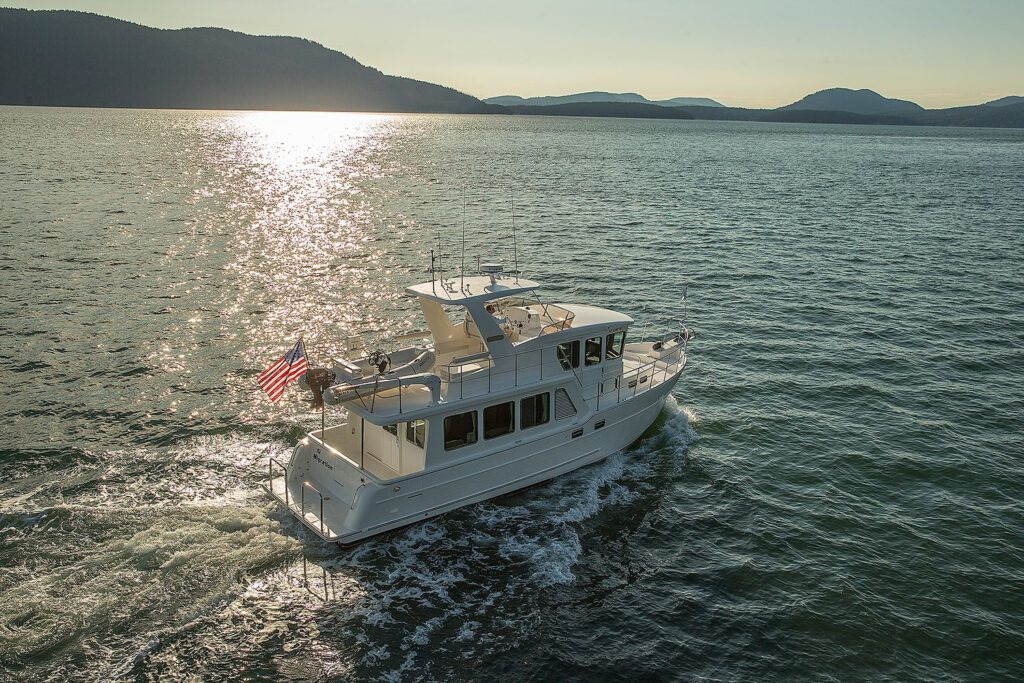
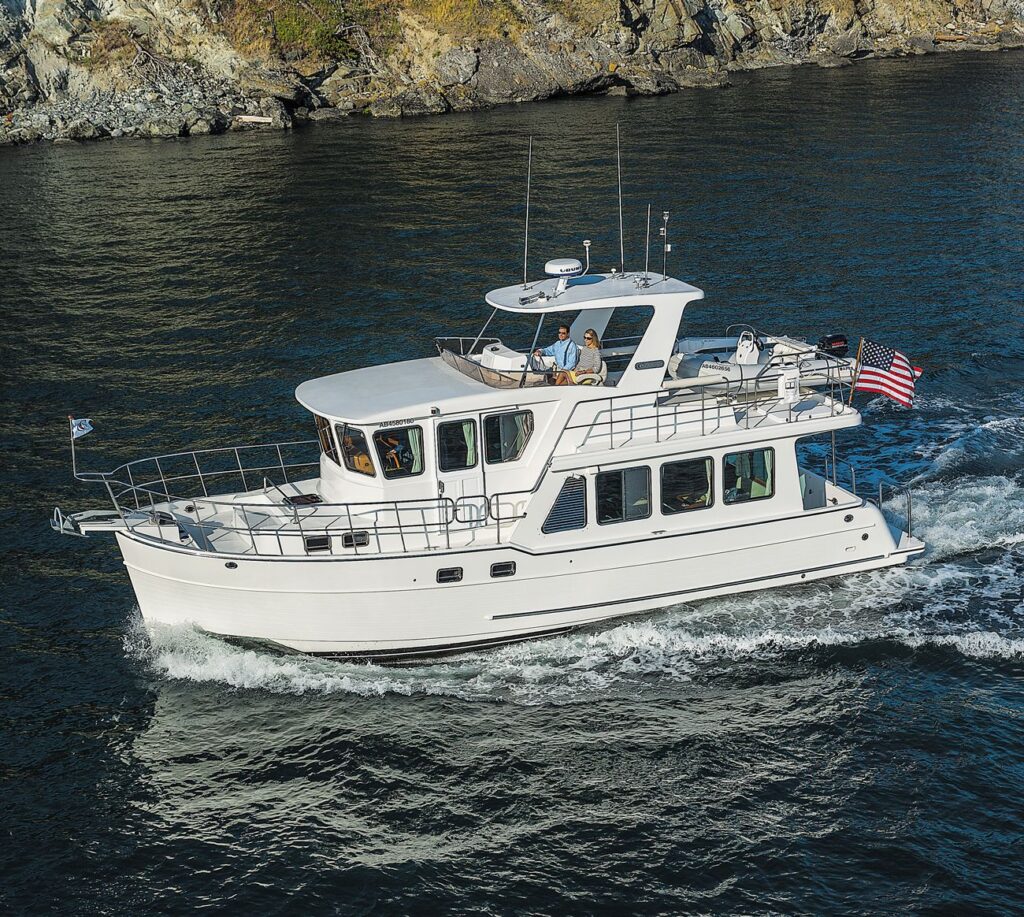
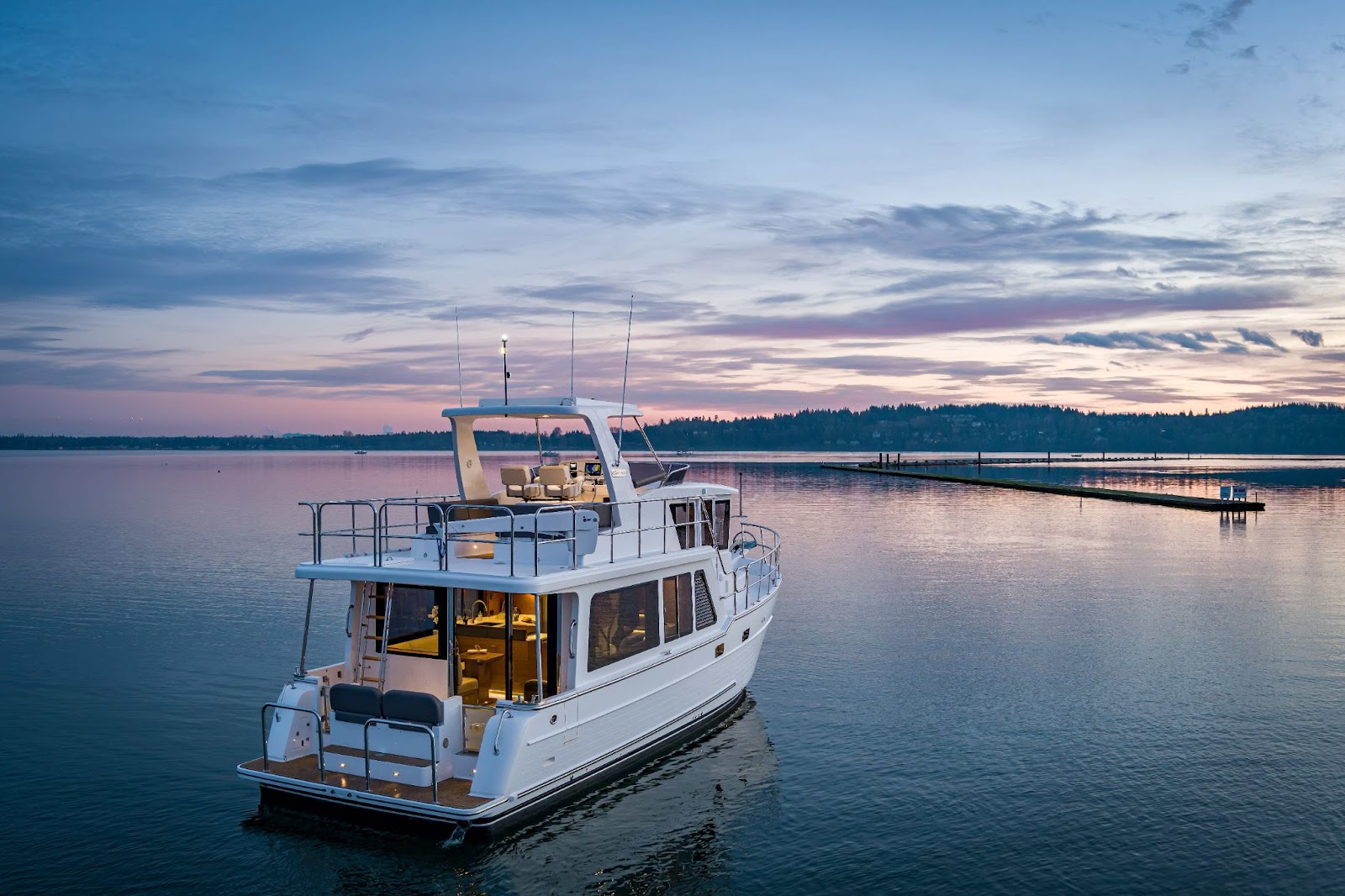
A boat intended for permanent living needs residential-grade ergonomics. In our 49 Pilothouse, for example, extended time aboard is supported by an enhanced galley with residential appliances, an island queen master stateroom, a flexible guest stateroom, high ceilings, and large windows that let natural light fill the primary living areas. These features give prospective owners useful things to assess during a walkthrough, especially when imagining time indoors in rain or cold weather.
Personal space requires thoughtful boundaries. When two people share a vessel full-time, physical separation is necessary for harmony. Having distinct zones—such as a dedicated pilothouse with a settee, a separate main salon, and a protected cockpit—allows one person to read or work while the other cooks or navigates. Storage must be accessible without dismantling a berth or lifting heavy floorboards just to retrieve daily cookware or clothing.
Location and Community
Where you keep the vessel shapes your daily social rhythm. Marina living may offer shore services and a nearby community, depending on the facility. Marina docks function like small, walkable villages where neighbors exchange weather routing advice, lend mechanical tools, and look after lines during a gale.
Liveaboard permission, availability, fees, and services vary by marina; confirm them before making the location part of your plan.
Anchoring or picking up a mooring ball may offer a different degree of privacy and separation from dockside activity, but it demands self-sufficiency. Every trip ashore for groceries, laundry, or trash disposal requires lowering the dinghy and planning around wind, chop, and tide.
Weighing the Tradeoffs Against Your Priorities
Transitioning aboard requires trading modern conveniences for lifestyle control. Before committing, consider how these compromises line up with your personal priorities:
- Maintenance vigilance versus passive homeownership: Boats live in a corrosive saltwater environment. Seacocks, strainers, raw-water impellers, house batteries, and brightwork demand scheduled inspection and maintenance. If mechanical troubleshooting stresses you, vessel life will quickly feel overwhelming.
- Physical space versus environmental access: Compare the particular yacht’s usable space with the space you actually need. You must be comfortable with reduced closet space, compact refrigeration, and fewer appliances in exchange for panoramic water views and mobility.
- Work connectivity and noise: Remote work may be practical when coverage, equipment, the service plan, and the working space suit your needs, but ambient conditions can disrupt focus. Rain drumming on a fiberglass hardtop, wind in the rigging, and generator hum during battery charging cycles are standard parts of the working environment.
- True financial costs: Depending on what you keep or sell ashore, vessel ownership introduces haul-out fees, bottom painting, engine servicing, marine insurance, and slip fees. Living aboard should be chosen for the quality of life, not as a speculative budget-saving measure.
Exploring the Lifestyle Before Committing
The smartest way to test whether your expectations match the reality is to spend prolonged, unstructured time on the water.
Arrange a suitable trial stay or cruise on a vessel with a layout similar to what you envision owning, within your experience and appropriate conditions. Spend days managing cooking in the galley, doing dishes with limited water pressure, monitoring battery state-of-charge, and working remotely while sharing tight quarters. Pay attention to how you feel when it rains for three consecutive days in an anchorage.
If the daily rhythms, hands-on maintenance, and spatial realities still appeal to you, the next step is assessing the practical, legal, and mechanical requirements of vessel selection. Researching the operational questions behind Can You Live on a Trawler? will help you evaluate hull styles, tankage needs, and year-round climate control so you can build a sensible transition plan.
Sources