
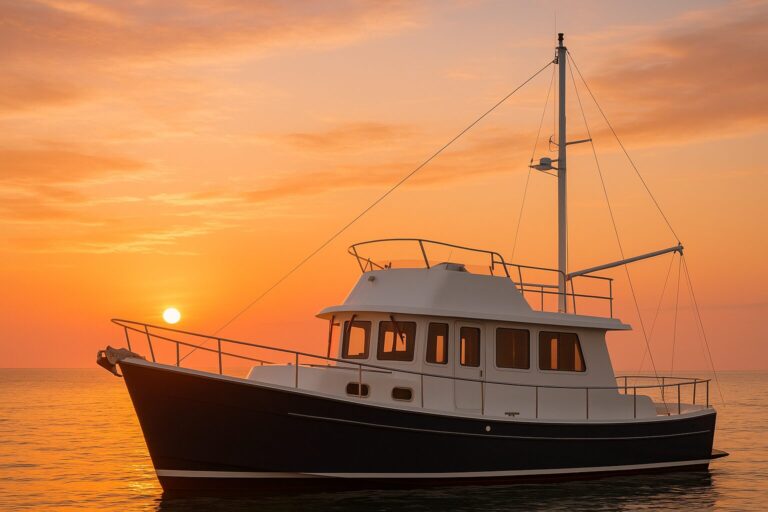
If you own or are planning to buy a trawler or pilothouse yacht, chances are you’re already thinking about more than just where your next cruise will take you, including the new-vs-used trawler decision. These vessels are built for serious travel and extended time on the water, and with that comes a need for the right protection. But here’s the thing: insuring a trawler yacht isn’t quite the same as insuring a typical runabout, sailboat, or fishing boat.
Trawler owners often find that their insurance needs are more specialized because these boats are used differently, travel greater distances, and carry more equipment than the average pleasure craft. Whether you’re a first-time owner or a seasoned cruiser, understanding how trawler yacht insurance differs from standard boat policies can help you make sure you’re properly covered, avoid costly surprises, and protect your investment for years of adventures ahead.
Why Trawler Yachts Need Specialized Insurance
Trawler yachts, especially those designed for long-distance cruising, stand apart from most recreational boats in size, weight, and purpose. Unlike a speedboat or weekend fishing boat, a trawler typically has a full- or semi-displacement hull, which allows for slower, fuel-efficient travel over long distances. These vessels often range from 35 to 60 feet or more and are equipped with robust engines, large fuel tanks, full galleys, and comfortable living quarters. Some even carry auxiliary equipment such as stabilizers, watermakers, generators, and advanced navigation electronics.
Because of this design, trawlers are often used for extended cruising rather than just day trips. Owners may spend months at a time aboard, traveling up and down the coast, exploring inland waterways, or even venturing to remote destinations and international waters. That lifestyle means more time on the water, more exposure to changing weather, and greater reliance on onboard systems that can be expensive to repair or replace.
Standard boat insurance policies are often designed with smaller, locally used boats in mind, assuming they’re hauled out each winter and only operated within a short radius of the marina. A trawler doesn’t fit that mold, so the coverage must reflect the different risks: long voyages, high-value equipment, and a lifestyle closer to that of a floating home.
Coverage Areas and Navigation Limits
One of the first differences trawler owners notice when shopping for insurance is how policies handle navigation limits. Most small-boat policies restrict coverage to inland waters or a defined distance from the coastline, sometimes just 50 or 100 nautical miles. That might work for weekend outings, but it’s far too restrictive for a boat designed to go the distance.
Trawler yacht insurance typically allows for broader cruising ranges, sometimes spanning entire coasts, multiple states, or even international waters. For example, if you plan to cruise from the Pacific Northwest to Alaska, or from Florida through the Bahamas and the Caribbean, you’ll need a policy that specifically includes those routes. Some policies even allow transoceanic voyages, though they often require special approvals, experience documentation, and sometimes an additional premium due to the increased risks.
It’s important to be upfront with your insurer about your cruising plans. If you cross into areas not listed in your policy say, entering Canadian waters or making an unplanned stop in Mexico, you may find that a claim is denied. With trawlers, where long passages and foreign ports are common, ensuring your policy matches your intended routes is crucial.
Higher Hull and Equipment Values
Trawlers and pilothouse yachts often carry a higher overall value than a typical powerboat, not just because of their size, but because of the extensive equipment onboard. Stabilizers, sophisticated navigation systems, generators, solar panels, dinghies, and long-range fuel systems all add to the replacement cost of the vessel. Many owners also invest heavily in upgrades and customizations to make their yacht more comfortable for long-term living.
Because of this, insurance for a trawler must account for these additional systems and upgrades. A standard policy might undervalue the true cost of repairs or replacement if, for example, your stabilizer system is damaged in rough seas or your generator fails while cruising abroad. Ensuring your policy lists the correct agreed value of the boat, including upgrades, helps avoid disputes if you ever need to file a claim.
It’s also wise to ask whether your policy includes “agreed value” coverage rather than “actual cash value.” Agreed value locks in a payout amount in the event of a total loss, without factoring in depreciation, which can be significant on high-end systems.
Extended Living and Liability Considerations
Many trawler owners spend extended periods aboard, sometimes using their boat as a part-time or even full-time residence. This raises unique liability and personal property concerns that standard boat insurance doesn’t always cover.
For example, if you live aboard for months, you’ll likely have personal belongings on board like clothing, tools, electronics, and household items that wouldn’t be covered by a basic marine policy. Some trawler yacht insurance policies include or allow riders for personal effects coverage, protecting these items if they’re stolen, damaged, or lost at sea.
Liability limits are another key difference. Because trawler yachts often host guests, cruise internationally, and dock in busier marinas, many owners choose higher liability coverage than the average boater. Some policies also offer pollution liability, which can protect you if your vessel accidentally leaks fuel or oil, a situation that can lead to heavy fines and cleanup costs.
Crew, Charter, and Special Use Cases
While most trawler owners operate their boat privately, some hire crew for longer voyages or even use their yacht for occasional charter. These scenarios require specialized endorsements. If you have a hired captain, mate, or deckhand, your policy may need to include Jones Act coverage or workers’ compensation to protect both you and your crew. Similarly, if you plan to offer your boat for charter, even informally, you’ll need a policy designed for commercial use.
Failing to disclose these details can lead to denied claims if an accident occurs while the crew are aboard or while the boat is under charter. Insurers who specialize in trawlers and cruising yachts can help tailor coverage for these cases.
Why Working with a Specialist Matters
Not all marine insurance providers understand the unique needs of trawler and pilothouse yacht owners. Working with a broker or insurer experienced in this niche can save you headaches and money. They can help ensure your cruising plans, equipment, and lifestyle are all factored into the policy, rather than trying to squeeze your vessel into a one-size-fits-all recreational boat plan. The right specialist can also advise you on requirements for offshore voyages, safety equipment that may be mandatory for coverage, and even discounts for things like training courses, updated electronics, or storm-preparation plans.
Final Thoughts
Owning a trawler or pilothouse yacht opens the door to incredible adventures, extended cruising, exploring new coastlines, and the freedom to live comfortably on the water. north pacific yachts But with that freedom comes responsibility, and making sure your yacht is properly insured is one of the most important steps you can take to protect both your vessel and your lifestyle.
We turn your cruising dreams into reality by developing bespoke trawler and pilothouse yachts built for comfort, safety, and performance. From the initial hull design to the final varnish, our experienced naval architects and craftsmen collaborate with you every step of the way, integrating fuel-efficient engines, ergonomic deck layouts, and beautifully appointed living spaces. With industry-leading warranties and personalized support, we make sure your new yacht feels like home the moment you step on deck. Reach out to us by email at info@northpacificyachts.com for personalized responses to all your inquiries. If you’d prefer a conversation, we invite you to give us a call at 1-877-564-9989.