
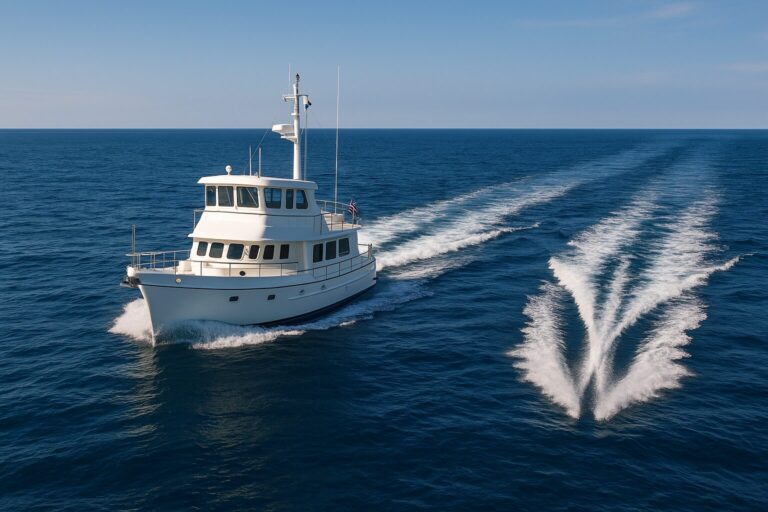
Few topics in the trawler world generate as much conversation as the debate between single and twin-engine configurations. Both have dedicated advocates who can list out the advantages and shortcomings of each setup. While some captains swear by the simplicity and long-range efficiency of a single-engine vessel, others won’t leave the dock without the safety of twin power. This discussion goes far beyond personal preference; it touches the very core of what defines a trawler’s character, reliability, and cruising capability.
For owners and builders alike, engine configuration is one of the most important design choices. It influences not just performance but also fuel economy, maintenance, handling, and peace of mind at sea. The idea of redundancy, having a backup system that can take over if something fails, is central to this debate. In long-distance cruising, especially across the challenging waters of the North Pacific, knowing your vessel can keep moving after an engine issue offers tremendous reassurance. However, redundancy comes at a cost in complexity, space, and efficiency. To truly understand which setup fits your needs, it helps to look deeper into how single and twin-engine trawlers perform in practice, and what each brings to the table.
The Heart of the Debate
Engine redundancy is more than just having two engines. It’s about managing risk and ensuring safety under various conditions on rough seas, remote coastlines, or long passages where help might be hours or even days away. The traditional trawler philosophy leans toward rugged simplicity: one dependable diesel engine built to run for thousands of hours, supported by robust mechanical systems and careful maintenance. Modern boaters, however, have broader expectations. Many want better maneuverability, higher cruising speeds, and the confidence that comes with dual propulsion systems. This evolution reflects how trawlers are used today. While some owners still cross oceans, many others explore coastal routes, island chains, and inland waterways where twin engines offer greater control and convenience. Understanding where and how you plan to cruise is key to choosing between these philosophies.
The Case for Single Engines
Single-engine trawlers are favored for their simplicity, economy, and reliability. With one propulsion system, there are fewer components to maintain, fewer failure points, and often more space in the engine room. This layout makes servicing and inspection easier, something every trawler owner appreciates on long voyages. A single engine is also more fuel-efficient. Because only one powerplant is pushing the vessel, drag and weight are reduced, translating into better miles per gallon. This extended range is invaluable for ocean crossings or remote cruising areas with limited refueling options. The savings add up over time, both in operational costs and maintenance.
Single-screw trawlers also benefit from centerline thrust, meaning the propeller’s power is delivered straight down the vessel’s keel line. This alignment provides balanced handling, particularly in heavy seas. Combined with a large rudder and a bow thruster, many captains find single-engine trawlers predictable and steady, even when maneuvering in marinas or tight anchorages. For those concerned about propulsion failure, builders often offer auxiliary or “wing” engines with smaller, independent motors that can provide enough thrust to maintain steerage in emergencies. These compact systems, usually diesel-powered, consume little fuel and weigh far less than a second full-sized engine. While not designed for long passages, they can safely move the vessel to calmer waters or a nearby harbor. Of course, a single-engine system demands discipline in maintenance. Regular inspections, oil analysis, spare parts inventory, and fuel system checks are crucial. But for those willing to stay proactive, a single-engine trawler represents an elegant balance of endurance, simplicity, and economy.
The Case for Twin Engines
Twin-engine trawlers are built around one key concept: redundancy equals safety. Two engines mean that if one fails, the other can keep the vessel moving. This advantage becomes vital in rough seas, strong currents, or tight channels where losing propulsion could be dangerous. For many owners, that extra peace of mind justifies the added complexity. Beyond safety, twin engines deliver exceptional maneuverability. The ability to operate each propeller independently allows for precise control, especially during docking or navigating narrow marinas. Skilled captains can pivot a twin-screw trawler almost in place without touching the wheel, something single-engine operators often rely on thrusters for. This agility makes twin systems particularly appealing to cruisers who travel alone or without crew.
Modern twin-engine trawlers also offer improved performance and redundancy in onboard systems. Each engine can power separate alternators, cooling systems, or hydraulic pumps, ensuring critical functions remain operational even if one side fails. In terms of speed, twin configurations can often maintain slightly higher cruising velocities, though this comes at the cost of fuel efficiency. However, the trade-offs are worth considering. Two engines mean double the maintenance like two oil changes, two transmissions, and twice the number of belts, filters, and hoses to monitor.
The increased machinery can make engine rooms more crowded and inspections more time-consuming. Fuel economy tends to decrease due to added drag and weight, and the initial cost of installation and upkeep is notably higher. Despite these factors, the psychological comfort of redundancy remains strong. For many long-distance cruisers, especially those exploring the rugged, isolated waters of the North Pacific, having twin engines provides the reassurance that they can always find a way home.
Balancing Efficiency and Safety
Ultimately, choosing between single and twin engines is about balancing efficiency, safety, and cruising style. For ocean-crossing trawlers that operate at displacement speeds, a single-engine setup often makes more sense. These boats emphasize endurance and economy, using slow-turning, heavy-duty diesels that can run for thousands of hours. With careful planning and backup systems, they are extremely reliable.
For coastal cruisers or those who frequently navigate narrow harbors and unpredictable inlets, twin engines may be the better fit. The ability to maneuver precisely and maintain propulsion if one engine fails can make everyday cruising far less stressful. Many owners also feel more confident when introducing family or guests to extended voyages on a twin-engine trawler. Newer innovations continue to blur the lines. Some builders now integrate hybrid redundancy systems, such as electric get-home drives or hydraulic wing motors, that provide backup propulsion without the complexity of a full twin-engine setup. These modern solutions offer an appealing middle ground for owners seeking both efficiency and security.
Insights from Experienced Cruisers
Talk to seasoned trawler owners, and you’ll find a pattern: those who log long ocean miles often prefer the simplicity of a single-engine vessel, while those who spend time in confined or challenging coastal regions lean toward twins. Long-range cruisers emphasize maintenance discipline, proper spare parts management, and understanding every sound their engine makes. They argue that a well-maintained single diesel is as dependable as two smaller ones.
Twin-engine advocates focus on control and peace of mind. They highlight how easy docking and slow-speed handling become, particularly in variable weather. Some also note that modern twin systems, with synchronized controls and efficient propeller designs, have reduced the fuel consumption gap compared to older models. The best advice from experienced captains is to match your propulsion choice to your cruising plans, not just your budget. Understanding how you intend to use your trawler, and where, will often reveal which configuration truly fits your needs.
Making the Right Choice
The single versus twin-engine debate will likely never end, and that’s because both systems work exceptionally well when matched to the right type of boater. A single-engine trawler rewards those who appreciate simplicity, mechanical understanding, and efficient long-range performance. A twin-engine trawler suits those who prioritize maneuverability, safety redundancy, and ease of handling in tight quarters.
Before making a decision, it’s worth consulting builders, marine engineers, and other owners who operate in similar waters. Consider your typical cruising routes, the distance between service facilities, and your comfort level with maintenance. The choice you make will shape not only your trawler’s performance but also your confidence and enjoyment on every voyage. In the end, both single and twin-engine trawlers embody the same goal: dependable cruising and peace of mind at sea. Whether powered by one reliable diesel or a pair of synchronized engines, the best trawler is the one that matches your cruising dreams, delivers safety through preparation, and carries you confidently through every mile of open water.
Contact Us
We turn your cruising dreams into reality by developing bespoke trawler and pilothouse yachts built for comfort, safety, and performance. From the initial hull design to the final varnish, our experienced naval architects and craftsmen collaborate with you every step of the way, integrating fuel-efficient engines, ergonomic deck layouts, and beautifully appointed living spaces. With industry-leading warranties and personalized support, we make sure your new yacht feels like home the moment you step on deck. Reach out to us by email at info@northpacificyachts.com for personalized responses to all your inquiries. If you’d prefer a conversation, we invite you to give us a call at 1-877-564-9989.