
Starting a long-distance voyage across the North Pacific aboard a custom trawler or pilothouse yacht is a thrilling adventure, but it also demands meticulous provisioning. The success of your journey hinges on more than navigation and seamanship; it depends on having the right supplies at the right time. Below, we’ll walk through the key considerations for stocking your boat, managing perishables, and maintaining essential systems, all woven into detailed, narrative paragraphs that reflect real-world experience.
Planning Your Provisions and Menu
The foundation of any successful provisioning plan is a well-thought-out menu that balances variety, nutrition, and ease of preparation. Begin by listing the meals you and your crew enjoy most—breakfasts like oatmeal with dried fruit, lunches featuring hearty soups, and dinners built around pasta, rice bowls, or grilled proteins. Sketch these out week by week for the duration of your anticipated voyage, then add an extra 10–20 percent to account for delays or unexpected guests. Rather than drafting an exhaustive spreadsheet, use a simple table on paper or in a tablet app to map your main ingredients like grains, proteins, vegetables, and identify which recipes share components. For example, a bag of rice can form the base for stir-fries, curries, and rice pudding, while a package of freeze-dried peas can enrich soups, stews, and casseroles. This approach minimizes random leftover ingredients and streamlines shopping trips before departure.
When it comes to treats and morale boosters, don’t underestimate the importance of small indulgences. A box of chocolate, tins of smoked nuts, or vacuum-packed jerky can lift spirits on a long, gray day. Stashing a few instant-coffee sachets, specialty teas, or a small supply of flavored drink mixes gives each crew member a moment of comfort. Finally, before your final load-out, gather your staples—cooking oil, salt, pepper, and a selection of your favorite spices into a single container. Keeping these essentials together ensures you won’t find yourself digging through lockers mid-meal preparation.
Storing Fresh, Frozen, and Dry Goods
A balanced provisioning plan also demands a smart storage strategy. Fresh produce tomatoes, peppers, apples should be consumed within the first week or two. Store them in a ventilated locker away from direct sunlight, ideally with airflow to prevent mold. As you work through your fresh supply, transition to frozen goods: meats, fish, and vegetables that stay safe and nutritious for weeks if your freezer holds –18 °C (0 °F) or colder. Arrange frozen packages in shallow trays or baskets so you can quickly locate what you need without letting the freezer door stay open too long.
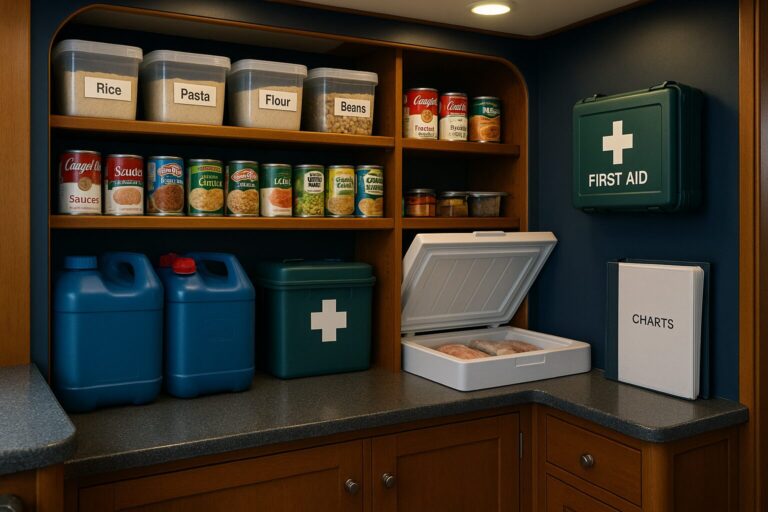
Dry goods form the backbone of any long cruise. Keep staples rice, oats, legumes, and pasta in airtight containers or heavy-duty resealable bags, all clearly labeled with the contents and the date you packed them. Store these on the top shelf of your pantry locker, where they are easy to reach and safe from leaks or seawater intrusion. Below, designate a section for canned and jarred items. Group them by meal type like soups, sauces, vegetables, and proteins—so you can grab what you need without riffling through every can. Although it’s tempting, avoid over-packing: too many cans can become a hazard in rough seas if not secured properly. Instead, plan for a mid-cruise restock stop at a well-supplied port, especially if your route takes you through areas known for affordable provisions.
Managing Water and Fuel Supplies
On a long passage, water and fuel require as much attention as your pantry. Calculate your daily water usage, including drinking, cooking, and basic washing, and multiply by the number of people aboard. A conservative estimate of 5 liters per person per day covers drinking and meal prep, but you’ll need more if you plan to rinse gear or take freshwater showers. If your trawler is equipped with a watermaker, schedule routine filter changes and carry spare filter cartridges. In addition, haul at least 50 liters of emergency water in jerry cans stored on deck or in a dedicated locker. Label each container with its fill date and rotate the stock so that the oldest gets used first.
Fuel management follows a similar logic. Record your expected engine and generator running hours, then add 20 percent to that figure to create a safety buffer. Store diesel in marine-approved tanks or containers, each clearly marked with the fill date and fuel grade. A water-separating filter between your fuel pickup and engine helps remove condensation and protects your systems. Make it a daily ritual to inspect your tanks for leaks and check the gauge or dipstick. When you top off at ports, siphon the new fuel into a separate, inspected tank before integrating it into your main supply; this limits contamination risks.
Preparing for Medical and Mechanical Emergencies
Even with the best planning, mishaps can happen. A comprehensive first-aid kit should include bandages, antiseptics, over-the-counter pain relievers, seasickness tablets, and any prescription medications your crew requires. Store the kit in a brightly colored, waterproof case and mount it in a location everyone can reach, such as near the helm or in the main salon locker. Next to your medical supplies, arrange your spare-parts bin: engine belts, oil and fuel filters, impellers, fuses, light bulbs, and a sturdy roll of electrical tape. Use clear bins with lids that clip shut to keep the contents visible, and affix labels like “Engine,” “Electrical,” and “Plumbing.” Every time you replace a part, pause to swap in the fresh spare and log the change in your maintenance journal.
Safety gear demands similar care. Verify that your EPIRB’s battery and hydrostatic release are within their service dates. Inspect lifejackets for UV damage and worn straps, and test your harness tethers. Keep flares and smoke signals in a watertight box, and make sure everyone aboard knows exactly where to find them. Conduct regular safety drills so that, in an emergency, checking your survival gear becomes second nature.
Documenting and Digitizing Critical Information
Good organization extends beyond your lockers and lockers, it also applies to paperwork. Maintain a physical binder with clear sleeves for your vessel registration, insurance documents, emergency contact lists, and up-to-date paper charts of your intended cruising grounds. Treat this binder as sacred: store it in a dry locker protected from spray and condensation. In parallel, create a digital folder on a rugged tablet or laptop that mirrors the binder’s contents as PDFs. Include user manuals for your watermaker, generator, and navigation electronics. Back these files up on a high-capacity USB drive or portable SSD, which you keep separate from your computer in case of hardware failure. If your vessel has onboard Wi-Fi or satellite internet, update the digital folder whenever you dock at a marina new notices, chart corrections, or weather-routing advisories can make all the difference when you’re hundreds of miles offshore.
Leveraging Technology for Inventory Tracking
While there’s something satisfying about a handwritten checklist, digital tools can dramatically improve accuracy. A simple spreadsheet with columns for item name, quantity, unit of measure, and “use by” date can become your provisioning dashboard. Update your consumption rates daily: note how much rice, water, or fuel you’ve used and compare it against your plan. Set up conditional formatting to highlight when supplies fall below a predetermined threshold, prompting you to cut back or plan a resupply. For those who prefer an app, several cruising-focused inventory managers allow barcode scanning, offline edits, and syncing across devices. Choose one that works reliably without constant internet access, and test it thoroughly during shakedown cruises.
Embracing Flexibility and Teamwork
No provisioning plan survives contact with real-world conditions unchanged. Weather delays, equipment repairs, or unexpected detours will all affect your consumption rates. Embrace this by building flexibility into your schedule: allow for extra days at sea, and plan your resupply stops near well-stocked ports. Assign clear roles for provisioning tasks, one crew member audits the pantry each week, another tests the watermaker and manages jerry cans, and a third inspects fuel levels and spare parts. Rotating these duties keeps everyone engaged, spreads the workload, and ensures that no single person becomes overloaded.
Final Thoughts
Organizing long-term provisioning on a trawler is an art that combines foresight, discipline, and adaptability. By planning a menu that maximizes shared ingredients, layering fresh, frozen, and dry goods in accessible storage zones, and maintaining rigorous water, fuel, and safety routines, you build a reservoir of confidence as deep as the ocean itself. Digital and paper documentation work hand in hand to give you the information you need when connectivity fades, and a collaborative crew culture turns planning into a shared adventure.
We turn your cruising dreams into reality by developing bespoke trawler and pilothouse yachts built for comfort, safety, and performance for first-time trawler owners. From the initial hull design to the final varnish, our experienced naval architects and craftsmen collaborate with you every step of the way, integrating fuel-efficient engines, ergonomic deck layouts, and beautifully appointed living spaces. With industry-leading warranties and personalized support, we make sure your new yacht feels like home the moment you step on deck. Reach out to us by email at info@northpacificyachts.com for personalized responses to all your inquiries. If you’d prefer a conversation, we invite you to give us a call at 1-877-564-9989.