
When people imagine life aboard a trawler or pilothouse yacht, they often picture calm seas, a steady deck underfoot, and leisurely hours spent cruising. The reality, however, is that the ocean has its own rhythm. Even in fair weather, the surface is rarely flat, and rolling from side to side is a natural part of being at sea. While most trawlers are designed with heavy displacement hulls that provide good stability, rolling motion is still noticeable, and it can impact the comfort of everyone onboard. This is where stabilizer systems enter the conversation. They promise to smooth out the ride, keep the horizon steady, and make long passages far more enjoyable. But do you really need them?
What Stabilizers Do
The primary role of a stabilizer system is to counteract the rolling caused by waves. Even in moderate seas, waves striking the hull from the side can create a pendulum-like motion that repeats again and again. While this movement is rarely dangerous on a well-designed trawler, it can be unpleasant for passengers and tiring for the crew. Rolling not only contributes to seasickness but also makes simple activities like cooking, dining, or even sleeping more challenging.
Stabilizers don’t eliminate motion altogether, but they significantly reduce both the angle and the duration of rolls. Instead of leaning sharply and swinging back in a wide arc, the boat will respond more gently and recover more quickly. That difference can transform a trip from a physically draining experience into one that feels calm and manageable. For long-range cruisers, this can mean more miles covered in comfort, less fatigue at the end of the day, and greater enjoyment of life onboard.
The Types of Stabilizers
There are two main categories of stabilizers you’ll find on trawlers today, each with its own strengths.
Fin Stabilizers
These systems use large, wing-like fins mounted below the waterline on each side of the hull. Controlled by sensors and hydraulics, the fins adjust their angle automatically in response to wave motion. When a wave tries to roll the boat, the fins push against the water in the opposite direction, dampening the motion. Fin stabilizers are highly effective at sea when the boat is underway and moving forward. Many newer designs also include at-anchor functionality, which uses the same fins to provide stabilization when the yacht is stationary, though this requires powerful hydraulics and energy consumption.
Gyroscopic Stabilizers
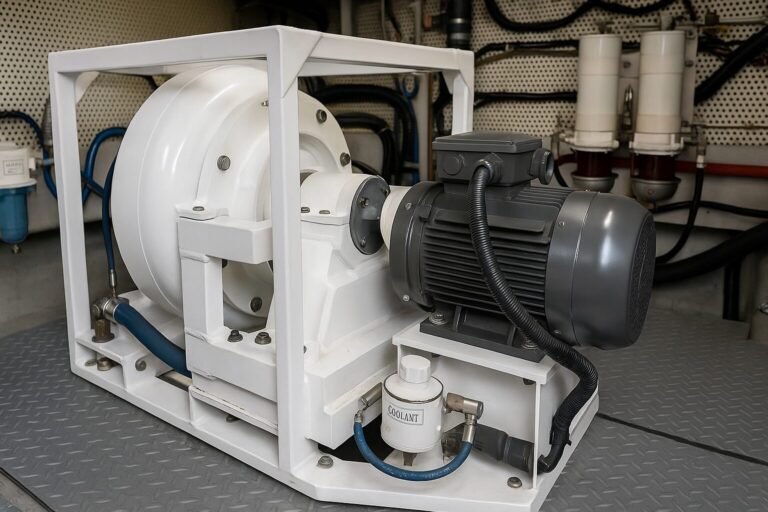
Gyro systems, often referred to simply as “gyros,” are housed entirely inside the boat, usually in the engine room. They rely on a spinning flywheel that generates angular momentum. When the boat begins to roll, the gyro resists the motion by producing torque in the opposite direction. Unlike fins, gyros do not require forward movement to work, making them especially effective at anchor. They are compact and avoid adding drag in the water, though they do consume electrical power and require cooling systems to manage the heat produced by the spinning flywheel.
Both technologies are well proven. Fins are favored by many long-range cruisers who spend significant time underway in open water, while gyros appeal to owners who spend more time anchored or moored but still want comfort without hull appendages.
Do You Really Need Stabilizers?
This is the question every trawler owner eventually faces, and the answer depends on a variety of personal factors.
1. Where You Cruise
If your boating adventures are primarily in sheltered waters like bays, sounds, or inland passages, you may encounter fewer days with heavy seas. For example, in the Inside Passage between Washington and Alaska, many days bring calm conditions, and rolling may be minimal. In contrast, if you plan to cross the Gulf of Alaska, venture offshore in the North Pacific, or tackle longer bluewater passages, the motion of the ocean becomes unavoidable. In those cases, stabilizers can make a dramatic difference in comfort and safety.
2. How Long You Cruise
Duration also matters. A short two-hour trip on a rolling day might be tolerable without stabilizers, but extend that to a week-long passage, and the constant motion becomes exhausting. Seasickness can accumulate, even in those not normally prone to it, and the physical toll of bracing against every roll can lead to fatigue. For cruisers who spend weeks or months aboard, stabilizers can transform the entire lifestyle by turning challenging conditions into manageable ones.
3. Who You Have On Board
Your tolerance for motion may be high, but what about your family or guests? Many seasoned boaters have a strong “sea stomach,” but friends or partners may not. For them, even a mild roll can turn excitement into misery. Stabilizers often become the deciding factor for whether non-sailors enjoy the trip and want to come back again. For owners who plan to host family, friends, or even charter guests, investing in stabilizers is as much about hospitality as it is about personal comfort.
4. Resale Value
Even if you think you can manage without stabilizers, future buyers might see them as an essential feature, especially in higher-end trawlers. Having them installed not only broadens your market but also helps protect the resale value of your yacht. Many buyers assume that a serious cruising vessel will be equipped with stabilizers, and boats without them may be harder to sell or command a lower price.
The Pros and Cons
Like any advanced system, stabilizers come with advantages and trade-offs that every owner should weigh carefully.
Pros:
- Significantly increases comfort underway and at anchor
- Reduces seasickness, especially for guests and less experienced boaters
- Makes daily life onboard easier, from cooking to resting
- Adds a sense of safety and confidence in rougher seas
- Improves resale value and buyer appeal
Cons:
- High cost to purchase and install, often six figures for larger systems
- Adds complexity, requiring maintenance and potential repairs
- Consumes power (gyros) or creates drag and fuel inefficiency (fins)
- Occupies space inside the hull or alters the exterior design
- May not be necessary in regions with consistently calm waters
Alternatives to Stabilizers
For those hesitant to invest in a powered stabilizer system, there are simpler and less expensive alternatives that can help manage rolling.
- Paravanes: These are passive stabilizers deployed on outriggers, where “fish” or vane-shaped devices trail in the water to resist rolling. They are mechanically simple, highly reliable, and effective, though deploying and retrieving them takes effort.
- Ballast and Hull Design: Many trawlers are naturally more stable thanks to deep displacement hulls, a low center of gravity, and additional ballast. Choosing a design optimized for bluewater cruising can reduce the need for additional systems.
- Smart Cruising Habits: Sometimes, the best stabilizer is good planning. By carefully selecting your weather windows, adjusting your route, or waiting out a storm in a protected anchorage, you can avoid much of the rolling motion altogether.
Making the Decision
Ultimately, the decision to install stabilizers is about lifestyle. If your vision of cruising includes long passages, remote anchorages, and hosting friends and family, then stabilizers may feel like a necessity. They expand the range of conditions in which you can comfortably operate, giving you more freedom and flexibility. On the other hand, if you plan shorter trips in calmer waters and are content with the occasional roll, the investment may not be worth it.
For many trawler owners, the answer becomes clear after time on the water. A boat that feels fine on calm days may suddenly seem inadequate in heavier seas, and the appeal of stabilizers grows. Comfort and confidence are hard to put a price on, and stabilizers deliver both.
Final Thoughts
Stabilizer systems are one of the most frequently discussed features among trawler and pilothouse yacht owners, and they are central when evaluating the pros and cons of trawling. They do not make a boat immune to the sea, but they greatly improve comfort, reduce seasickness, and open the door to longer, more ambitious cruising plans. At the same time, they come with significant costs and maintenance responsibilities, so they should be weighed carefully against your cruising goals.
Do you really need them? That depends on where you go, how long you stay out, and who you bring with you. For some owners, stabilizers are the key to unlocking the best possible experience at sea. For others, they are a luxury that may not be justified. What’s certain is that understanding the role of stabilizers helps every trawler owner make a more informed choice and ensures that life on the water is as enjoyable as it should be.
Contact Us
We turn your cruising dreams into reality by developing bespoke trawler and pilothouse yachts built for comfort, safety, and performance. From the initial hull design to the final varnish, our experienced naval architects and craftsmen collaborate with you every step of the way, integrating fuel-efficient engines, ergonomic deck layouts, and beautifully appointed living spaces. With industry-leading warranties and personalized support, we make sure your new yacht feels like home the moment you step on deck. Reach out to us by email at info@northpacificyachts.com for personalized responses to all your inquiries. If you’d prefer a conversation, we invite you to give us a call at 1-877-564-9989.