
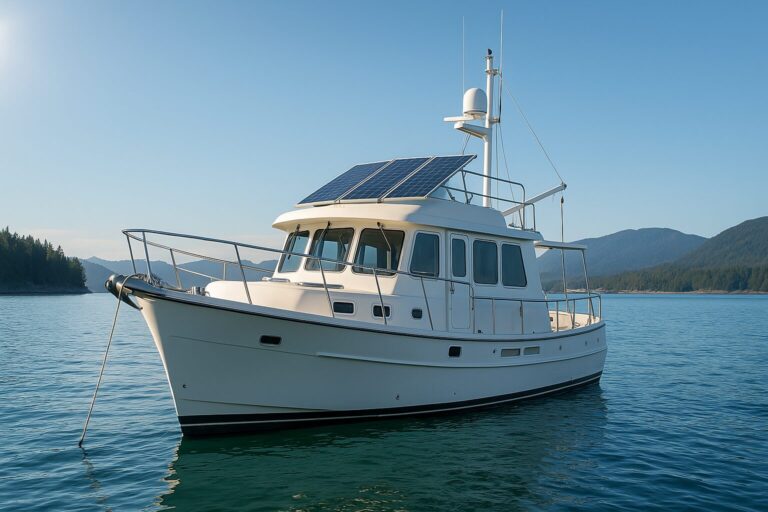
views, making them a favorite among serious cruisers. In recent years, many owners have begun exploring solar power as a way to reduce generator noise, lower fuel bills, and lessen their environmental impact. Especially in the North Pacific, where long summer days meet remote anchorages, the idea of harnessing the sun’s energy to keep onboard systems humming is enticing. But how well does solar really perform on a pilothouse yacht, and what should you know before making the leap? Let’s dive deeper into the technical details, practical trade-offs, and real-world experiences that inform this growing trend.
The Allure of Solar Power
Solar power’s appeal lies first in its silence and simplicity. Modern photovoltaic (PV) panels convert sunlight directly into electricity with no moving parts, no exhaust, and virtually no maintenance beyond an occasional rinse to remove salt and bird droppings. A well-designed array can produce between 200 and 300 watt-hours per square foot per day in midsummer at northern latitudes, depending on tilt and shading. That means a modest 800-watt solar array about four panels on the pilothouse roof could generate 4–6 kilowatt-hours on a clear summer day. Enough, for example, to power LED lighting for 12 hours, run a two-cubic-foot DC refrigerator continuously, and recharge a smartphone and chartplotter batteries multiple times over.
Beyond energy generation, solar installation fosters a shift to energy-aware habits: owners tend to monitor consumption more closely, switch to energy-efficient appliances (like 12V induction cooktops or low-draw water pumps), and implement simple load-shedding strategies when clouds roll in. Over time, this behavioral change can amplify the benefits of the panels themselves, extending the time between generator start-ups and shrinking overall fuel use.
Key Benefits for Pilothouse Yachts
- Extended Station-Keeping: With a typical diesel generator burning 0.5–1 gallon per hour at low load, a few hours of run time each day quickly adds up. Solar allows you to maintain vital systems—navigation electronics, cockpit instruments, freshwater pumps—almost silently, even in jurisdictions where generator running hours are restricted.
- Fuel Savings & ROI: Assuming a generator uses one gallon of diesel per hour and diesel costs $4 per gallon, reducing run time by two hours per day saves $8 daily. Over a six-month cruising season (180 days), that’s $1,440 in fuel alone. A quality marine solar setup (panels, MPPT controller, wiring) might cost $4,000–$6,000 installed, putting a typical break-even point at around three to four seasons.
- Reduced Maintenance: Generators require oil changes, belt inspections, and occasional part replacements every 100–200 hours. Solar panels, conversely, come with warranties of 20 years or more and need only periodic cleaning and visual checks of wiring and mounting hardware.
- Environmental Stewardship: Solar power produces zero emissions during operation. For eco-conscious cruisers navigating pristine waters and anchoring in marine sanctuaries, cutting carbon and noise pollution aligns with a broader ethic of “leave no trace.”
Practical Considerations and Challenges
Here are some practical considerations and challenges you must stay prepared for:
Roof Space & Shading
Pilothouses often feature antennas, radar domes, ventilators, and solar vents that cast shadows at different times of day. Even partial shading of a single cell string can drop panel output by 50% or more. Planning the panel layout often with small “shadow-busting” diodes and choosing low-profile mounts can mitigate this.
Energy Audit & Load Matching
Start by listing every electrical device: lights (rated in watts), pumps (amps at 12V), navigation gear, galley appliances, and HVAC or heating systems. Multiply run times by current draw to arrive at daily amp-hour needs. Next, compare against expected solar yield: for instance, a 100-watt panel in late June at 48°N latitude might average 4–5 peak sun hours, yielding 400–500 Wh daily. Adjust system size to meet at least 80% of basic loads, reserving a generator or alternator for high-demand or emergency situations.
Battery Bank Sizing
Solar panels charge batteries only when the sun is up. To run lights and instruments overnight, you’ll need a battery bank sized for at least twice your overnight amp-hour draw—allowing a 50% depth of discharge to preserve lead-acid life, or up to 80% with lithium chemistry. For example, if overnight loads total 200 Ah at 12 V, a 400 Ah lead-acid bank or a 250–300 Ah lithium bank would be appropriate.
Weight & Stability
Panels, mounts, and cables add weight aloft. An average glass-backed 200 W panel weighs about 15–18 lbs; four panels plus hardware and wiring might total 80–90 lbs. Spread that load thoughtfully and reinforce deck structures as needed to avoid undue stress or windage issues.
Upfront Investment
High-efficiency glass panels ($250–$350 each), MPPT controllers ($400–$800), cabling, junction boxes, and professional installation can add up. However, incremental upgrades starting with one or two panels and expanding later—can ease the financial burden and allow you to “test drive” solar for a season before committing fully.
Real-World Applications
A popular case study involves a 48-foot aluminum pilothouse trawler cruising the Inside Passage. The owner installed 1,000 W of rigid panels atop the hardtop and aft coachroof, feeding a 750 Ah lithium bank. During a 10-day cruising trip in July anchoring three nights and motoring seven, the owner reported zero generator starts. Essential loads (LED lighting, autopilot, chartplotter, freshwater pump) averaged 80 Ah per day, easily offset by solar yields of 100–120 Ah on sunny days and 60–80 Ah under intermittent cloud cover.
Another hybrid setup on a 55-foot trawler features 800 W of flexible panels, a small wind turbine, and a high-efficiency 6 kW generator. The combination allows extended stays in fogbound fjords where solar alone might underperform. Here, wind charging picks up slack at night or on overcast days, while solar recharges batteries quickly when skies clear. The generator remains as a fallback, firing only under heavy loads, like running air conditioning in a tropical anchorage.
Installation Tips for Pilothouse Yachts
- Panel Selection: Rigid, tempered-glass panels deliver 18–22% efficiency and resist UV degradation, making them ideal for long-term reliability. Flexible panels (12–16% efficiency) conform to curved surfaces but may degrade faster and aren’t recommended for continual flexing areas.
- Mounting Hardware: Opt for stainless-steel or anodized aluminum mounts designed for marine use. Low-profile mounts reduce windage; adjustable tilting mounts can boost winter performance but add complexity and potential points of failure.
- Charge Controllers: MPPT controllers maximize energy harvest by adjusting the panel operating voltage to the battery’s needs, especially valuable in cold or low-light conditions. Look for controllers with data logging and Bluetooth or Wi-Fi connectivity for remote monitoring.
- System Monitoring: Integrated energy monitors give real-time feedback on solar input, battery state of charge, and load consumption. Many systems tie into multifunction displays at the helm, enabling the captain to track energy flows without leaving the pilothouse.
- Professional Integration: Marine electrical codes demand proper shore-power isolation, circuit protection, bonding, and grounding. Enlist a certified marine electrician to ensure safe and code-compliant wiring, particularly when integrating with the yacht’s existing AC and DC systems.
Is It Right for You?
Determining whether solar suits your pilothouse yacht depends on your cruising style, energy habits, and budget:
- Extended Explorers vs. Weekenders: Owners who delight in wilderness anchorages, bay hopping, and “off-grid” living will reap the greatest benefits. Casual weekend cruisers might find a smaller array sufficient or even unnecessary if marina shore power is routinely available.
- Budget & ROI Timeline: Consider the total cost panels, batteries, controllers, and installation against potential fuel savings and pain points (noise, maintenance). A well-maintained system often pays for itself in five to seven years, with panels still performing reliably for 20 years or more.
- Scalability: Even if space or budget limits you to two panels initially, plan wiring conduits and roof reinforcement to allow easy additions later. Incremental upgrades let you learn your true energy needs before committing to a full-blown system.
Conclusion
Pairing solar power with a pilothouse yacht can transform your cruising lifestyle, unlocking silent, emissions-free energy that keeps lights on, electronics running, and refrigeration humming without the drone of a generator. With thoughtful planning, balancing panel capacity, battery storage, and your unique load profile, you can spend more time soaking in coastal beauty and less time managing machinery. We turn your cruising dreams into reality by developing bespoke trawler and pilothouse yachts built for comfort, safety, and performance. From the initial hull design to the final varnish, our experienced naval architects and craftsmen collaborate with you every step of the way, integrating fuel-efficient engines, ergonomic deck layouts, and beautifully appointed living spaces. With industry-leading warranties and personalized support, we make sure your new yacht feels like home the moment you step on deck. Reach out to us by email at info@northpacificyachts.com for personalized responses to all your inquiries. If you’d prefer a conversation, we invite you to give us a call at 1-877-564-9989.