
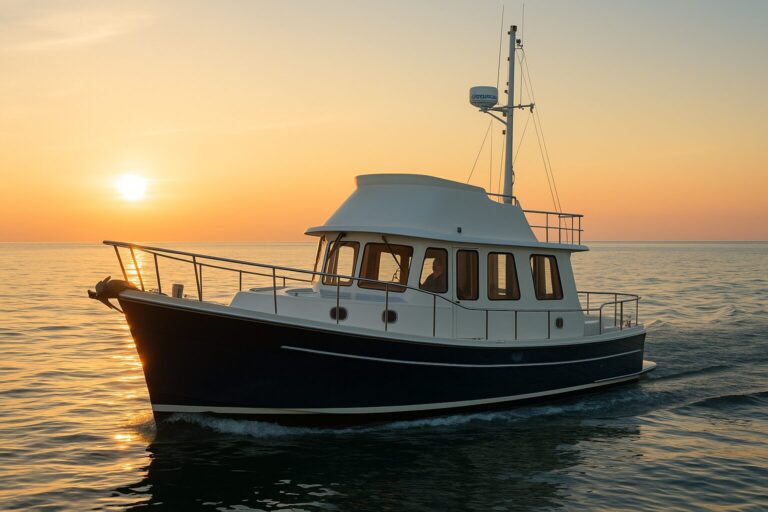
When you dream of charting your course across the North Pacific, the idea of a pilothouse yacht can feel like the ultimate freedom See our latest news. These vessels, often based on classic trawler designs, combine comfort, safety, and all-weather protection into a cohesive platform. At the heart of their appeal is an enclosed helm station typically mounted amidships or slightly forward, surrounded by large, wraparound windows. This protected space serves as both a command center and a living area, allowing a solo skipper to steer, navigate, and monitor instruments without exposure to rain, spray, or wind. Even in foul weather, you won’t need to suit up in multiple layers and heavy foul-weather gear every time conditions shift; instead, you can remain comfortably seated in a warm, dry pilothouse and keep constant watch with minimal fatigue. The expansive glazing grants nearly 360-degree sightlines, so you’re not craning your neck over a cockpit coaming or squinting through limited openings. This translates directly into safer navigation and less physical strain during extended passages.
Beyond the protective shell, pilothouse designs typically consolidate all critical electronics, engine controls, and navigation tools into one compact workstation. The chartplotter, radar display, engine throttles, fuel gauges, and communication gear all sit within easy reach of the wheel or helm seat. In many cases, sail-handling lines (sheets, halyards, reefing lines) are led back to winches located just steps from the helm often self-tailing and equipped with clutches so you can trim or ease sails from inside. By centralizing these controls, you minimize the number of trips you must make on deck, reducing exposure to slippery surfaces, sudden gusts, or breaking waves. Truly, the pilothouse becomes an all-in-one command bunker, tailored to the independent captain who wants to travel light on crew requirements without sacrificing capability.
Key Considerations for Single-Handed Voyaging
Even the most thoughtfully designed pilothouse yacht can present challenges if the onboard systems aren’t set up for solo operation. First and foremost, deck layout matters. A well-organized deck should feature clean piling and unobstructed walkways, with all running rigging led aft to the pilothouse or nearby cockpit stations. Look for dedicated rope clutches whose positioning allows you to lock off a line and attend to another task without leaving the helm. Winches should be self-tailing, allowing you to trim under load without a helper. If the factory setup routes sheets via the mast or wide cockpit benches, consider retrofitting additional clutches or cam cleats so you can handle every sail control from the pilothouse.
Automation and alarm systems play a critical role, too. A reliable autopilot, one that can steer to wind or waypoint—grants you short periods of hands-free operation, which are invaluable when you need to adjust sails, prepare meals, or simply rest your arms. Bilge-water alarm sensors, high-temperature engine alarms, and fuel-level monitors should all feed into audible warnings inside the pilothouse. Before undertaking any passage, test each alarm’s volume and placement; if an alert is too faint or muffled behind cabinetry, you might miss a critical warning. Many modern pilothouse yachts also feature engine-room cameras or remote temperature probes—consider installing these if they’re not standard, so you can periodically glance at the engine’s condition without heading below decks.
Finally, sail-handling systems deserve special attention on an offshore voyage. Roller-furling headsails and in-boom furler mainsails drastically simplify reefing and sail stowage, especially when sudden squalls appear. Electric winches or powered reefing systems save your arms and reduce the time it takes to shorten sail under pressure. If you’re intent on longer ocean legs, installing a lazy-jack system or boom brake can keep a downed mainsail neatly flaked, reducing the need for manual flaking in heavy seas.
Tackling Common Challenges
No matter how capable the yacht, solo sailing always brings unique hurdles. Fatigue management tops the list: without a crew to share watches, your ability to rest safely can mean the difference between a rewarding voyage and a dangerous situation. Develop a watch schedule that matches your personal circadian rhythm. If you’re at your sharpest during daylight, plan for shorter daytime watches and longer, more consolidated nighttime rests. Invest in a reliable watch-alarm system or even a simple timer that gently buzzes when it’s time to wake up, reducing the risk of sleeping through a course change or missing a sudden squall warning. Many solo sailors use a combination of autopilot and wind-steering vane (if the vessel is set up for one) so the boat can maintain course during brief, controlled naps.
Storm preparation presents another set of challenges. Before any forecasted low-pressure system, secure every piece of deck gear—fender lines, dinghy, spare sails—and double-check that pilothouse hatches and portlights are dogged down. Carry a storm anchor rig (often a heavy-duty anchor with a long snubber or specialized bridle), which you can deploy in heavy weather to slow drift and reduce strain on your main ground tackle. Practice rigging this setup at anchor so that, when conditions deteriorate, you can deploy it in minutes rather than wrestling with unfamiliar lines. Likewise, always stow spare oilskins, lifejackets, and personal safety equipment in easy-access locations getting caught on deck trying to locate gear is a recipe for injury.
Finally, no one is invincible at sea, neither physically nor mechanically. Carry a comprehensive first-aid kit and learn how to treat common boating injuries: lacerations, hypothermia, and seasickness, as well as more serious emergencies like fractures. For mechanical issues, stock essential spares—belts, hoses, impellers, filters—and equip yourself with a toolkit that includes a selection of wrenches, screwdrivers, pliers, duct tape, and emergency epoxy. A toolbox organized by category and stored in an accessible location can save precious minutes in a crisis. Equally important is reliable communication: a satellite phone or handheld satellite-messaging device allows you to summon help when shore-based assistance may be days away, whether it’s medical advice or mechanical troubleshooting.
Practical Tips for a Successful Solo Adventure
- Before committing to an ocean passage, take your pilothouse yacht out for shorter overnight trips. Hone your dockings, reefing drills, and autopilot operations in familiar waters.
- Whether it’s a pre-departure rundown or a storm-prep sequence, having printed, laminated checklists in the pilothouse ensures you don’t overlook critical steps, even under pressure.
- While solitude is appealing, checking in via VHF with nearby vessels or marina staff provides peace of mind. Regular position reports to a loved one ashore add an extra layer of safety.
- Mobile charting apps, satellite weather subscriptions, and AIS transponders turn your pilothouse into a high-tech command center. Familiarize yourself with each device’s quirks before relying on it at sea.
- Joining a local cruising association or online single-handed sailing forum lets you swap tips, troubleshoot problems, and even find potential crew hand-offs if you ever want company for a leg of your journey.
Why Choose North Pacific Yachts Services
We turn your cruising dreams into reality by developing bespoke trawler and pilothouse yachts built for comfort, safety, and performance. From the initial hull design to the final varnish, our experienced naval architects and craftsmen collaborate with you every step of the way, integrating fuel-efficient engines, ergonomic deck layouts, and beautifully appointed living spaces. With industry-leading warranties and personalized support, we make sure your new yacht feels like home the moment you step on deck. Reach out to us by email at info@northpacificyachts.com for personalized responses to all your inquiries. If you’d prefer a conversation, we invite you to give us a call at 1-877-564-9989.