

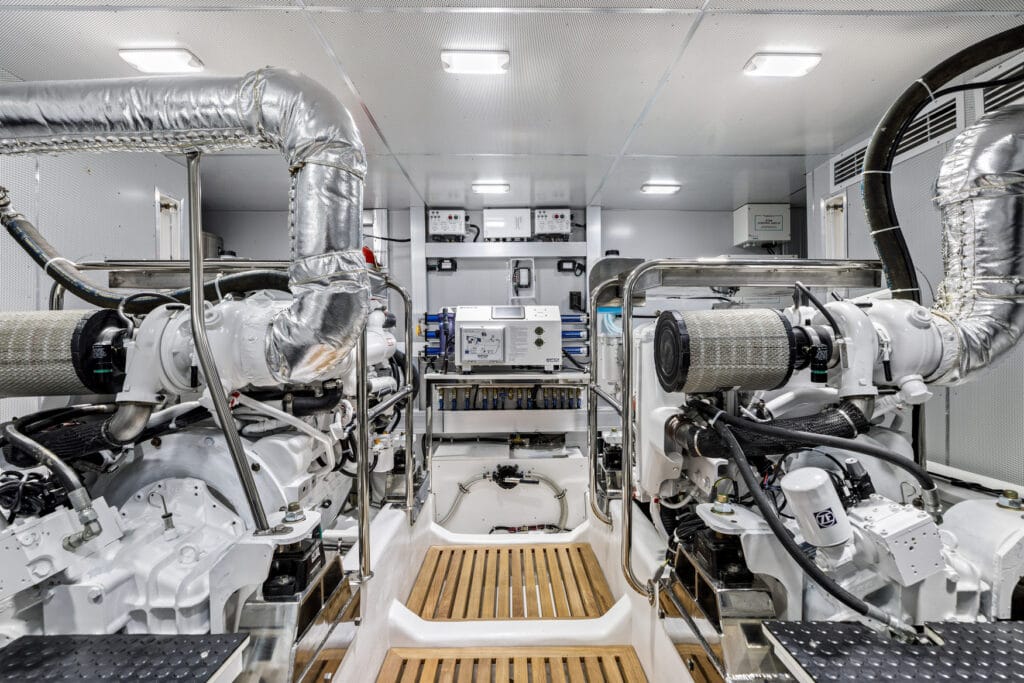
A seawater strainer intercepts debris in part of a cooling-water circuit. A clear basket is useful to observe, but it does not prove that the intake, hoses, pump, heat-transfer components, and discharge path are all working correctly.
Owners benefit from understanding that wider relationship and recognizing changes from normal. Strainer care should follow the installed product instructions, while unexplained cooling changes need assessment rather than a guessed repair.
Understand the Raw-Water Side
In a raw-water-cooled installation, outside water may enter through an intake and seacock, pass through a strainer and pump, carry heat away through cooling components, and leave through a discharge arrangement. Some engines exchange heat between a closed coolant circuit and the raw-water side; other machinery can have different arrangements.
The order, components, and shared or separate intakes vary. Use the actual vessel drawing and equipment manuals to identify the path. Do not assume every generator, engine, or air-conditioning system shares one intake or uses the same pump and exhaust arrangement.
Our guide to bilge access, sea chests, and through-hulls helps frame the access questions. The aim here is to understand why several parts of the circuit matter, rather than turn a generic description into an installation diagram.
Know the Documented Normal Indications
Learn the engine or generator’s specified operating indications and response instructions. Compare readings under similar load and conditions, and record a changed temperature, alarm, discharge appearance, sound, or visible leakage from the safe observation points identified for the boat.
A temperature gauge and a visible water discharge provide different information. Neither, alone, measures the condition of the entire circuit. Discharge patterns can vary by installation and operating state; a change deserves attention without proving a blocked strainer or failed impeller.
The Northern Lights operator manual illustrates the distinction between before-starting checks, operation, alarms, and periodic cooling service. Use the corresponding instructions for your own generator and engine, including their different requirements.
Adapt Strainer Attention to Actual Conditions
Debris exposure can change with the cruising area and conditions. Weeds, floating material, or other intake contamination may justify more attention than a familiar clean-water routine. Combine those observations with the manufacturer’s specified inspection and service requirements.
GROCO ARG strainer maintenance provides a product-specific example of basket, sight-glass, and seal care. Its cleaning and tightening instructions apply to that identified series; they are not a general procedure for every cap, housing, or seal.
Know the correct isolation, opening, cleaning, reassembly, and return-to-service method before undertaking owner-authorized work. Arrange instruction or service if the method or access is unclear. Do not open a strainer or cooling component while running equipment to see whether water arrives, and never open a hot pressurized coolant system.
Use a seasonal maintenance calendar for Pacific Northwest cruising yachts to schedule required service and keep condition observations linked to the boat’s records. A seasonal window should not replace a due task or urgent changed indication.
Keep the Wider Cooling System in View
A strainer removes debris at its location. It cannot confirm an unobstructed hull intake, sound suction hose, effective pump, clean heat-transfer surfaces, or a healthy discharge path.
| Area | Why a clear basket is insufficient |
|---|---|
| Intake and supply | Restriction can occur before water reaches the basket |
| Hoses and connections | Leakage or other deterioration can affect the path |
| Pump and drive | Condition and operation need their own checks and service |
| Heat-transfer components | Cooling performance depends on more than visible debris |
| Discharge or exhaust arrangement | Its condition and requirements are installation-specific |
The yacht engine maintenance guide develops the larger machinery schedule. Pump impellers, filters, and seals may also belong in the kit described in spare parts every owner-operator should carry for coastal trawler cruising, when matched to the installed equipment and your service plan.
A spare or a clear basket does not identify the fault. Give a technician the observed readings, load, conditions, alarm, recent service, and when the change appeared. That context is more useful than selecting a replacement from the symptom alone.
Respond to Cooling Warnings Without Testing a Theory
If a high-temperature alarm sounds, a reading exceeds the documented limit, or flow appears abnormal, follow the equipment’s response instructions and the vessel’s safe operating plan. The correct reduction, stopping, and navigation decisions depend on the equipment and situation; a universal shutdown sequence or seconds-to-damage claim is inappropriate.
Do not repeatedly restart suspect machinery to see whether a restriction clears. Avoid opening hot plumbing or manipulating an unidentified valve. Arrange assessment and the appropriate return-to-service checks before relying on affected equipment again. An active fire, exhaust hazard, or flooding condition requires the vessel emergency plan.
Build familiarity during normal use: note the indications, inspect permitted visible condition, and record service accurately. If you need available raw-water layout records or want to discuss access aboard your yacht, contact us. Strainer attention is a practical part of cooling readiness when it remains connected to the whole installed system.