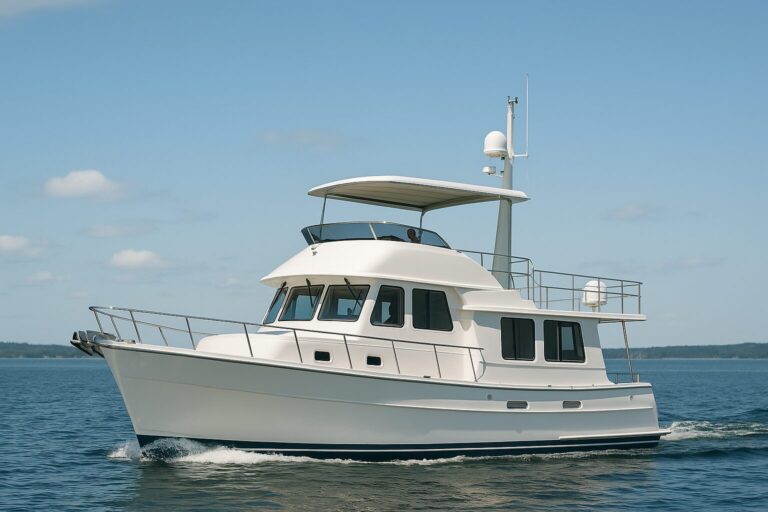
A fixed roof provides overhead shelter without a moving roof panel, while an opening panel can bring fresh air and an open view of the sky into an enclosed helm. Neither arrangement is automatically the better choice. The useful comparison is between the conditions you cruise in, how often you would open the panel, and the maintenance the particular installation requires.
Overhead design can be easy to overlook beside cabin layouts or galley storage. Yet the arrangement above the helm deserves attention during a walkthrough: consider its shade, light, opening controls and relationship to the other ventilation aboard.
Understanding Opening Mechanisms
A fixed roof and an opening panel describe different arrangements, but a sliding roof is itself one kind of opening system. Other openings may use a hinged hatch or a different sunroof mechanism. The component and boat specifications establish what a particular system can do.
The marine component market includes manual sliding hatches and electric sunroofs. Compare how a particular panel opens, where it travels, and how it closes and locks, rather than assuming that a larger opening will suit every boat.
- Manual panels: Try the handle and locking arrangement while the boat is securely docked. Ask which positions may be used during operation and what care the mechanism requires.
- Electric panels: Ask how the controls work, how the panel is secured, and what happens if power or the drive mechanism fails.
- Hinged hatches: Consider the direction of opening, clearance, and whether the opening actually provides useful airflow where you sit. Follow the component’s instructions for its intended use.
Airflow and Shelter in the Real World
In warm weather, an overhead opening may help release warm cabin air when other openings provide a path for air to enter. The result depends on wind, the arrangement of doors and windows, and the location of the panel. During a walkthrough, consider both the seated helm position and any companion seating instead of judging airflow only while standing beneath the opening.
In cool or rainy weather, shelter and a comfortable enclosed helm may take priority. Ask how the roof works with the yacht’s heating, shading, insulation and ventilation, including when the panel stays closed.
A fixed roof avoids the moving seals and tracks of an opening panel, but the complete installation still needs inspection, including fittings and penetrations. An opening panel adds its own seals and maintenance requirements. Neither label establishes insulation performance, structural capacity or freedom from leaks.
For an opening roof, ask how rain is managed around the frame and what the manufacturer permits when the panel is open. Consider whether the controls are easy to reach and whether you can close the panel promptly without disrupting the helm routine.
Moving Parts, Maintenance, and Walkthrough Questions
Opening assemblies add moving components and interfaces that need the care specified for that product. Ask for the relevant operating and maintenance instructions before deciding whether the upkeep fits your ownership routine.
For example, Webasto’s 20 Series manual includes cleaning and lubrication of its guides, locking instructions, and restrictions on walking on the panel or using it as an escape hatch. Those instructions illustrate the importance of checking the exact component; they do not establish the ratings or maintenance schedule of every marine roof.
Evaluating an overhead system during an onboard walkthrough requires looking beyond whether the switch makes the panel move. Use these questions to assess the installation with the seller, broker, or component supplier:
- Drainage paths: Where do the frame scuppers drain? Do they dump directly onto side decks, or are they plumbed through internal hoses to discharge above the waterline? This system works alongside your overall approach to pilothouse drainage and window sealing, and water must flow overboard without pooling against deck joints.
- Walking loads: Is the panel rated for foot traffic? If crew members must step onto the roof to wash down the cabin top or secure canvas, knowing whether that surface can handle a person’s weight is critical. Never assume an overhead panel is walkable unless the manufacturer explicitly rates it for deck loads.
- Equipment clearance: How does the panel’s opening travel affect the mounting of solar panels, radar masts, searchlights, or horns? A sliding panel retracting aft needs empty space above the coachroof, directly competing for real estate with rooftop accessories.
- Manual overrides and security: If an electric motor fails during a sudden downpour, can you close and dog the panel down by hand? Does the mechanism feature a positive underway lock to keep it from sliding shut when the boat pitches into a steep chop?
- Service access: Can you inspect and replace the rubber seals without pulling the entire structural cassette out of the deckhouse?
Matching the System to Your Cruising Intent
An opening panel may be appealing if you spend time in mild conditions and enjoy natural airflow. It can also admit unwanted sun or rain, so consider shading and the practical routine of opening and closing it. A fixed roof can still form part of a well-ventilated helm through other openings or the yacht’s ventilation system.
If your cruising involves frequent rain or you expect to keep the opening closed most of the time, a fixed arrangement may fit your priorities. If you regularly enjoy mild weather and would use the opening often, the extra care may be worthwhile. Equipment space and roof access are separate questions: ask the boat supplier to confirm permissible mounting locations, loads and foot traffic for the exact roof.
Inspect the installation during a securely docked walkthrough. Check the gasket condition, listen to how the drive hardware sounds under load, and evaluate how the helm layout manages natural light and rain runoff. If you are weighing different configurations for your intended cruising grounds, talk with us about how your day-to-day priorities align with the overhead design of a particular boat.
Sources