

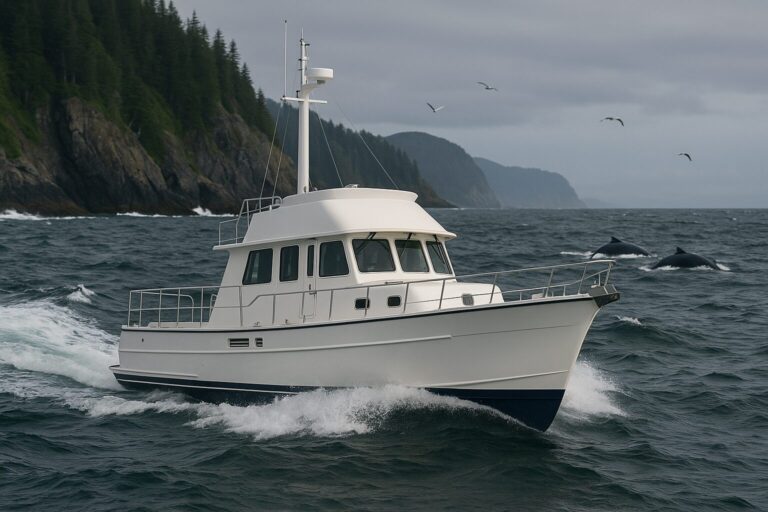
Trawlers represent more than just a means of passage on the water, they are floating homes, hobby investments, and symbols of a cruising lifestyle. Yet like any major purchase, it pays to think ahead. A boat that depreciates slowly can significantly reduce your overall cost of ownership, provide stronger leverage when arranging financing, and offer greater flexibility if your cruising plans change. For many owners, recouping 70–90 percent of the original purchase price on the secondary market is not only possible but common among top-tier marques. Understanding which brands hold their value best helps you choose wisely today and ensures you can trade up or sell without steep discounts tomorrow.
Key Factors That Drive Depreciation
Several interlocking elements govern how a trawler’s value changes over time. First and foremost is construction quality: solid-fiberglass or composite hulls with encapsulated ballast resist osmosis and structural fatigue, so brands that over-engineer their laminates tend to age with fewer issues. Equally important are the onboard systems. Engines, generators, and electronics from respected manufacturers such as Yanmar, Cummins, or Lugger inspire buyer confidence, especially when backed by detailed maintenance logs. Production numbers also matter: a semi-custom builder making only a handful of hulls per year creates a sense of exclusivity but limits buyer pools, while volume builders deliver broader name recognition but face stiffer competition on resale listings.
Market dynamics add another layer. Fuel prices can swing buyer preferences; when diesel tops $5 per gallon, true full-displacement trawlers that burn one to 1.5 nautical miles per gallon become particularly attractive for long-range cruising. Seasonality plays a role too, boats listed in spring and early summer often fetch 5–10 percent more than identical models offered in late fall or winter. Finally, meticulous upkeep can vastly improve resale outcomes. A boat with a recent bottom job, fresh boot stripe, repowered engine within the past five years, and modern navigation electronics may command a 10–20 percent premium over comparable vessels in “as-found” condition.
Top Brands That Retain Value
Among the many trawler builders, a handful consistently outperform the market in resale stability. Nordhavn sits at the top of the list. Designed for long-distance passagemaking and backed by a global dealer network, Nordhavns typically depreciate only 5–10 percent over five years. A well-maintained Nordhavn 47 from 2008, for example, can still bring in 85–90 percent of its original list price if its mechanical systems and seawater seacocks remain in optimal condition.
Grand Banks follows closely, celebrated for its classic Downeast styling and solid joinery. Early models (pre-2010) saw 25–30 percent depreciation in their first five years, but later builds equipped with joystick docking controls, Cummins QSB engines, and upgraded electronics often stabilize around 75–80 percent of the new price after eight years. Their timeless aesthetics and reputation for comfortable accommodations attract buyers willing to pay a premium.
Kadey-Krogen occupies the semi-custom niche with a reputation for robustness and versatile interiors. After the 2008 downturn, 2008–2010 Kadey-Krogens dropped 40–45 percent off list, but as these hulls approach classic status, refitted examples now sell for 50–60 percent of original MSRP. Newer models, benefiting from modern systems and smaller production runs, often average 12–15 percent annual depreciation during their first decade.
Selene presents a compelling value proposition. Entering the market at 10–15 percent below comparable Nordhavns, Selenes follow a similar depreciation curve but lose fewer absolute dollars over time. A 2015 Selene 54, for instance, might depreciate at roughly 10 percent per year yet carry $150,000–$200,000 less total value loss than its Nordhavn counterpart, making it ideal for budget-focused long-range cruisers.
Other notable names include Fleming, Nordic Tugs, DeFever, and Island Gypsy. Flemings, known for generous midsize pilothouses, often hold 70–75 percent of their new price after seven years. Nordic Tugs in the 26–44-foot class regularly trade at 80–90 percent of original cost for recent hulls, driven by strong brand loyalty. Vintage DeFevers and Island Gypsys from the 1980s and 1990s have also enjoyed renewed interest; fully restored models with teak deck renewals, repowered engines, and updated electronics can fetch 50–60 percent of their original MSRP.
Practical Tips for Buyers and Sellers
Whether you’re about to list or considering a purchase, a few strategies can help you maximize value. Sellers should plan for spring listings, March through June aligns with peak buyer enthusiasm and routinely delivers 5–10 percent higher sale prices than off-season offers. Investing in preventive maintenance, such as a 1,000-hour engine service or generator overhaul often nets a premium equal to 50–70 percent of the service cost. Cosmetic improvements like fresh bottom paint, new antifouling, and minor upholstery repairs boost curb appeal and can shave weeks off days-on-market.
Buyers, on the other hand, must demand transparency. A complete maintenance binder or digital folder with invoices, refit receipts, and equipment manuals is invaluable. Compare sold prices for the exact make, model year, and equipment package in your area to gauge realistic market values. Engaging a broker who specializes in your chosen brand can streamline negotiations, these experts know the nuances of each model, the most desirable options, and where to find qualified buyers or sellers.
Finally, think ahead to your next step. If you plan to upgrade in five to seven years, target brands with the flattest depreciation curves Nordhavn and Grand Banks top that list. If minimizing absolute dollar risk is critical, mid-market names like Selene or Nordic Tugs offer lower entry costs and respectable resale retention. Matching your cruising goals, budget constraints, and long-term plans will set you up for smooth sailing both on the water and at the closing table.
Looking Ahead
The trawler market is evolving. Advances in hybrid propulsion, solar-augmentation packages, and lightweight composite materials may reshape buyer priorities over the next decade. Yet regardless of technological shifts, the fundamentals remain unchanged: a solid-built hull, reliable mechanicals, and a transparent history of care will always command buyer respect. By focusing on brands with proven value retention, timing your transactions wisely, and tracking maintenance meticulously, you can enjoy the cruising adventure you dream of, knowing your investment will stay afloat long after you cast off the dock lines.
We turn your cruising dreams into reality by developing bespoke trawler and pilothouse yachts built for comfort, safety, and performance for first-time trawler owners. From the initial hull design to the final varnish, our experienced naval architects and craftsmen collaborate with you every step of the way, integrating fuel-efficient engines, ergonomic deck layouts, and beautifully appointed living spaces. With industry-leading warranties and personalized support, we make sure your new yacht feels like home the moment you step on deck. Reach out to us by email at info@northpacificyachts.com for personalized responses to all your inquiries. If you’d prefer a conversation, we invite you to give us a call at 1-844-922-4877.
Brokerage & Pre-Owned
See current pre-owned listings and market inventory
Explore available pre-owned vessels through North Pacific Yacht Brokers to see what is currently on the market. You can also review our current new-build lineup to see how our designs have evolved.