

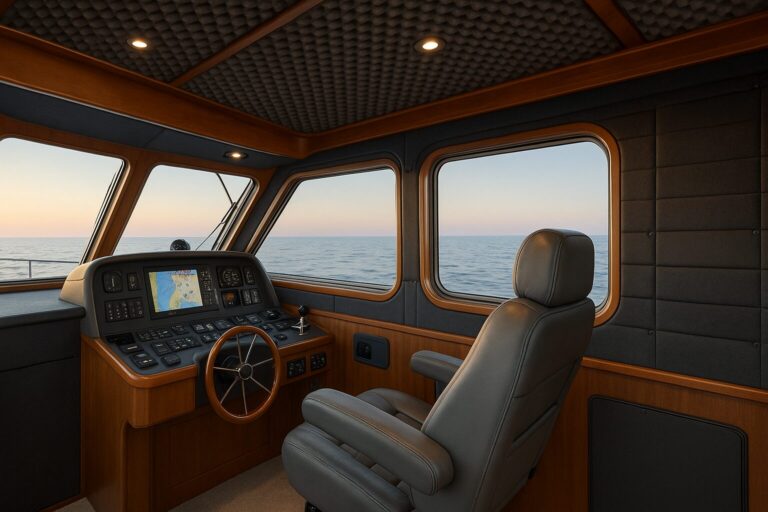
Pilothouse yachts offer unparalleled comfort and visibility, shielding you from spray and sun while you pilot your vessel across the North Pacific. Yet even the most luxurious helm can fall victim to noise: the low thrum of engines underway, water drumming against the hull, wind roaring through vents, and the distant chatter of life below decks. Beyond mere irritation, excessive noise can lead to fatigue, distract you from crucial sounds like an alarm or a change in engine tone, and ultimately undermine the very serenity you seek at sea. Fortunately, with a thoughtful approach to materials and installation, you can turn your pilothouse into a calm, focused command center.
Pinpointing Your Noise Sources
Before adding layers of insulation or foam, spend time in the pilothouse under real-world conditions. Cruise at varying speeds, switch the generator on and off, and note where noise intrudes most: do you hear engine vibration through the deck under your feet? Is wind whistling around the hatch seals? Does a wave slap against the port side produce a hollow knock? Grab a simple decibel meter app or just jot down your observations: a low, constant hum calls for mass-blocking materials, while higher-pitched whistles and rattles suggest air-sealing and flexible absorbers. This diagnostic step ensures you don’t blanket the entire pilothouse with the same treatment, keeping weight and cost under control.
Building Your Sound-Control “Sandwich”
Effective noise reduction combines three strategies: blocking, damping, and absorbing. First, block troublesome low frequencies like engine rumble and wave impact by adding mass. Marine-grade mass-loaded vinyl (MLV) is ideal here: it’s thin enough to fit under floorboards or behind bulkhead panels yet dense enough to resist vibration. Next, apply damping sheets—thin, aluminum-backed layers bonded to a polymer directly onto metal surfaces such as the overhead roof or engine bulkheads. These sheets convert structural vibrations into harmless heat, preventing them from radiating through the hull. Finally, finish with closed-cell foam panels, which trap mid- and high-frequency sounds like chatter, electronic beeps, and wind through vents. Instead of scattering these materials randomly, focus your efforts where your initial noise audit revealed the biggest problems: a humming console bulkhead, a rattling hatch frame, or a thin-walled section of overhead.
Smart Installation for Lasting Performance
Even the best marine-grade materials fail when installed carelessly. Start by sealing every seam, gap, and joint. A bead of acoustic-rated sealant around window perimeters, hatches, and ventilation intakes stops wind noise and prevents sound “leaks” between compartments. When mounting foam panels or MLV, leave a tiny air gap behind each section. This pocket of air acts like a springboard, trapping sound waves more effectively than direct contact. Use small spacers or fender washers behind fasteners to avoid panel bridging. When layering, apply damping sheets directly on metal, then MLV, and finally foam. This order kills vibration at its source, blocks whatever noise remains, and absorbs stray echoes. Remember that every pound counts on a yacht: concentrate heavier barriers in your pilothouse’s “hot spots” and rely on lighter materials elsewhere.
Adapting to North Pacific Conditions
Soundproofing in the North Pacific carries its own challenges. Temperature swings—freezing fog in the morning, bright sun at noon, cause materials to expand and contract. Choose products rated for extreme marine environments, with UV-resistant facings and operating ranges from well below freezing to scorching heat. Moisture is an ever-present threat: closed-cell foam and vinyl repel water, but if you use any open-cell layers, cover them with a waterproof membrane and ensure good airflow behind panels to stave off mildew. Finally, salt can corrode metal over time; when applying aluminum damping sheets, use compatible stainless-steel fasteners or a thin anti-corrosion coating to avoid galvanic damage.
DIY Touch-Ups and When to Call the Pros
Minor fixes replacing worn weatherstripping around hatches, sticking a few foam pads behind rattling electronics, or sealing drafty vents are well within the reach of most cruisers. A weekend project can noticeably quiet your wheelhouse and improve comfort. But if you plan to lay mass-loaded vinyl beneath pilothouse decking or apply damping sheets in tight engine-room corners, consider a professional refit shop. Certified marine upholsterers and yacht-interiors specialists have the tools to cut materials to complex curves, secure them in out-of-reach spots, and preserve fire-safety ratings. Ask for before-and-after transmission-loss tests so you can quantify decibel reduction, and be sure they follow marine-industry standards for both installation and materials.
Maintaining Your Sanctuary of Silence
After installation, don’t tuck your noise meter away for good. Every six months, inspect seals and gaskets for cracks or hardening, tighten any loose panels or fasteners, and clear drainage routes behind bulkheads so trapped moisture can escape. Reapply acoustic sealant where it’s thinned out by UV or vibration. If you notice sudden changes in noise levels—perhaps a new whistle at the port side or a low-end rumble under slow-speed throttle—trace it back to loose materials or damaged seals before it becomes a bigger problem.
A quiet pilothouse transforms the way you experience your yacht Read our trawler guide. Instead of shouting to hear chartplotter alarms, you catch every nuance of electronics and engine tones that signal performance or trouble. Conversations with crew or guests flow naturally, even in choppy seas. Night watches become genuinely restful, and your ears stay attuned to the subtle language of the ocean: the gentle creak of timbers, the distant call of seabirds, and the rhythmic pulse of water sliding beneath the hull. In the demanding environment of the North Pacific, this peace of mind isn’t a luxury; it’s an asset that keeps you alert, relaxed, and ready for whatever the sea brings next.
Why Choose North Pacific Yachts Services
We turn your cruising dreams into reality by developing bespoke trawler and pilothouse yachts built for comfort, safety, and performance. From the initial hull design to the final varnish, our experienced naval architects and craftsmen collaborate with you every step of the way, integrating fuel-efficient engines, ergonomic deck layouts, and beautifully appointed living spaces. With industry-leading warranties and personalized support, we make sure your new yacht feels like home the moment you step on deck. Reach out to us by email at info@northpacificyachts.com for personalized responses to all your inquiries. If you’d prefer a conversation, we invite you to give us a call at 1-844-922-4877.