

A trawler can appeal to a first-time yacht buyer who values deliberate travel, living space and time aboard. Whether it makes a good first yacht depends on the particular boat, your plans, your willingness to learn its systems and the support available to you.
Comfort aboard does not remove the work of ownership. Evaluating both sides of that relationship helps you choose a boat you will enjoy learning to operate.
The Cruising Reality: Pace, Passage Time, and Marina Life
Start with the trips you want to take. How long can you spend underway? Do you prefer time at anchor, marina stays or a mix? Does your home berth fit the exact yacht’s dimensions and access requirements?
A slower travel pace changes the time available for a passage. Work through a realistic itinerary with the candidate boat’s operating data, expected conditions and crew readiness. Do not assume that a trawler’s label guarantees economy, comfort or an easy learning curve.
Living arrangements matter too. Walk through the galley, seating, berths and storage as you would use them during a weekend or longer stay. The right layout is the one that fits your routines and physical needs.
Physical Demands and the Systems Work Behind the Comfort
Onboard conveniences depend on machinery, electrical systems, plumbing and regular care. Before buying, ask someone familiar with the yacht to demonstrate the documented checks and identify the tasks you can realistically perform.
Consider access as well as knowledge:
- Can you reach the equipment you need to inspect without awkward movement?
- Are labels and documentation understandable?
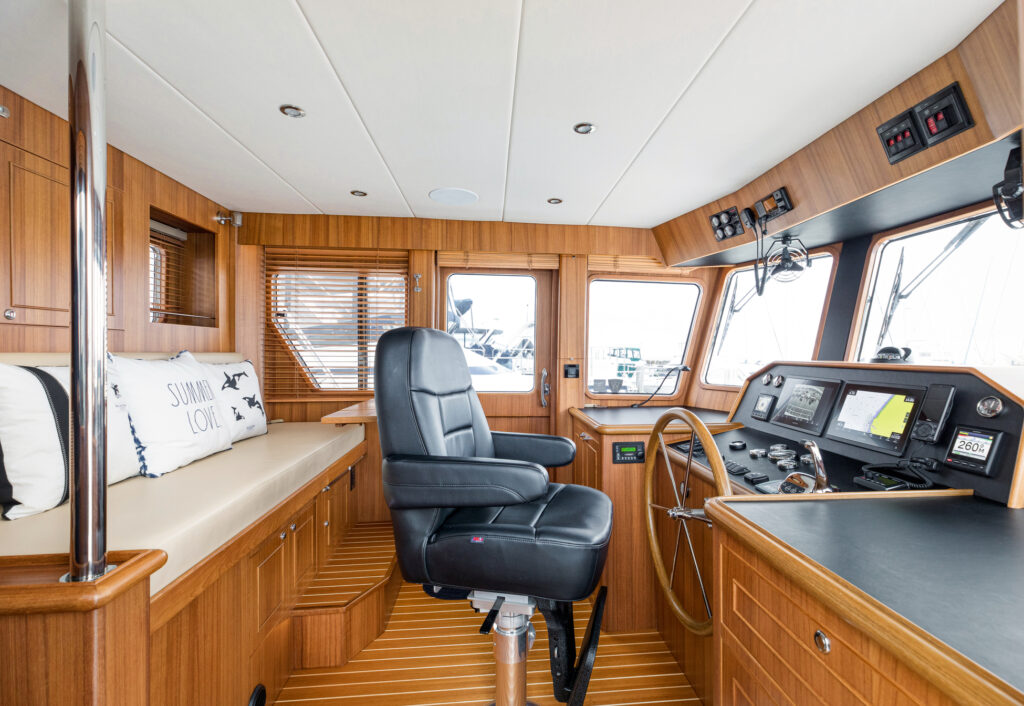
- Can both intended operators use the helm and move through the boat comfortably?
- Which maintenance tasks will you arrange with a professional?
- How will the crew communicate during deck work?
These are useful questions whether you cruise with a partner or contemplate operating alone. Our article is a pilothouse yacht right for single-handed cruising? explores that separate workload decision.
The Realistic Ownership Budget: Categorizing Operational Expenses
Purchase price is one part of the budget. Obtain current estimates for the exact boat and your intended location, including:
- Moorage, storage and haulout.
- Insurance and any insurer-specific experience or training requirements.
- Fuel and fitted auxiliary-system use.
- Scheduled machinery and systems service.
- Hull and running-gear care appropriate to the boat and local waters.
- Safety-equipment servicing and replacement.
- Unplanned repairs and professional support.
Use installed manuals, survey findings and service quotations to build the maintenance plan. A universal annual cost or service interval would hide the differences that matter most to a new owner.
Building an Intentional Education and Competency Path
There is no universal starter size. A boat’s visibility, movement routes, equipment, berth and handling behavior all affect the learning task alongside its dimensions.
Qualified instruction on the exact yacht can turn unfamiliar systems and routines into a practical learning plan. Agree with the instructor on the skills to develop, the conditions suitable for practice and how readiness will be assessed. Those steps should reflect your experience rather than a fixed progression toward offshore cruising.
For a single-screw yacht, docking a single-screw trawler in wind and current without drama explains the preparation questions to bring into instruction. Reading supports the process; hands-on familiarization establishes how your boat responds.
Practical Yacht Evaluation: Walkthrough and Sea Trial
Walk through a candidate boat with your intended use in mind. Keep a simple record:
| Area | Question to explore |
|---|---|
| Machinery access | Can you see and reach the documented inspection points? |
| Deck movement | Do access routes and handholds fit both operators? |
| Helm | Are sightlines and control reach suitable for you? |
| Living spaces | Do daily routines work with the layout? |
| Support | Who can provide instruction, service and answers about the exact boat? |
For example, our 49 Pilothouse is one model you can explore through that lens. Ask to discuss its actual layout and fitted equipment rather than inferring how it will handle or how many people can operate it.
An underway evaluation adds another kind of evidence. A sea trial checklist for a long-range trawler: what to feel, hear, and measure helps you record operating observations and distinguish personal preference from concerns that need a surveyor or technician.
Taking the Next Step
A trawler may suit a first buyer who enjoys the pace and accepts the learning, maintenance and planning that accompany it. A good choice connects the boat’s actual characteristics with your intended use and a realistic support plan.
If you are beginning your search, talk with us about your cruising goals, experience and the layouts you want to evaluate.